Best 3 Software Bill of Materials (SBOM) Software products
What is Software Bill of Materials (SBOM) Software?
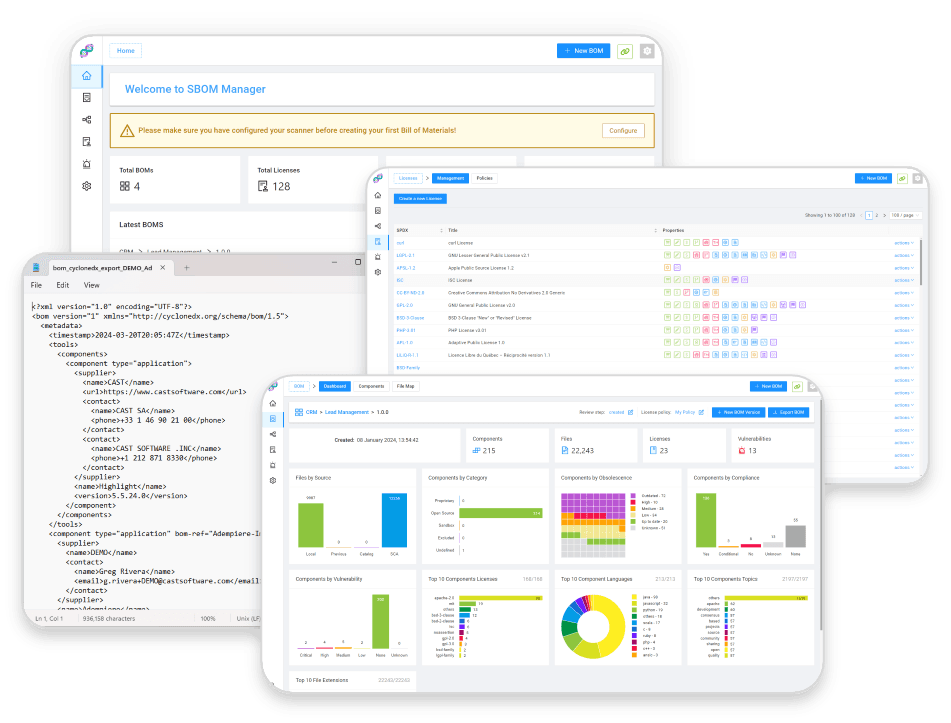
SBOM Software generates a detailed inventory of all components, libraries, and dependencies used in a software product. This helps organizations understand what’s inside their applications to manage risk and comply with security and licensing requirements.
What are the top 10 Security Software products for Software Bill of Materials (SBOM) Software?
Newest Software Bill of Materials (SBOM) Software Products
Software Bill of Materials (SBOM) Software Core Features
- Automated component discovery
- Dependency mapping
- License identification
- Vulnerability correlation
- Exportable SBOM reports
Advantages of Software Bill of Materials (SBOM) Software?
- Improves software transparency
- Helps manage security risks
- Simplifies compliance tracking
- Facilitates faster vulnerability response
- Supports supply chain security efforts
Who is suitable to use Software Bill of Materials (SBOM) Software?
Suited for software developers, security teams, compliance officers, and supply chain managers who need visibility into software composition.
How does Software Bill of Materials (SBOM) Software work?
The software scans the software build artifacts or source code to identify all constituent components and their versions. It then compiles this into a structured list which can be used to track vulnerabilities or licensing issues throughout the software lifecycle.
FAQ about Software Bill of Materials (SBOM) Software?
Why is an SBOM important?
It helps you know exactly what’s in your software, so you can spot risky components or license problems fast.
Can SBOM tools work with legacy software?
Some can, but it depends on how much access you have to the software internals.
Is SBOM only for open source components?
No, it covers both open source and proprietary dependencies alike.
How often should SBOMs be updated?
Ideally on every build or release to keep track of changes accurately.
Are SBOMs legally required?
In some industries and regions, yes, especially for critical infrastructure software.