
Artificial Intelligence at Siemens
Anzeigenöffentlicht: May 11, 2026 at 10:04 AM
News Article
Inhalt
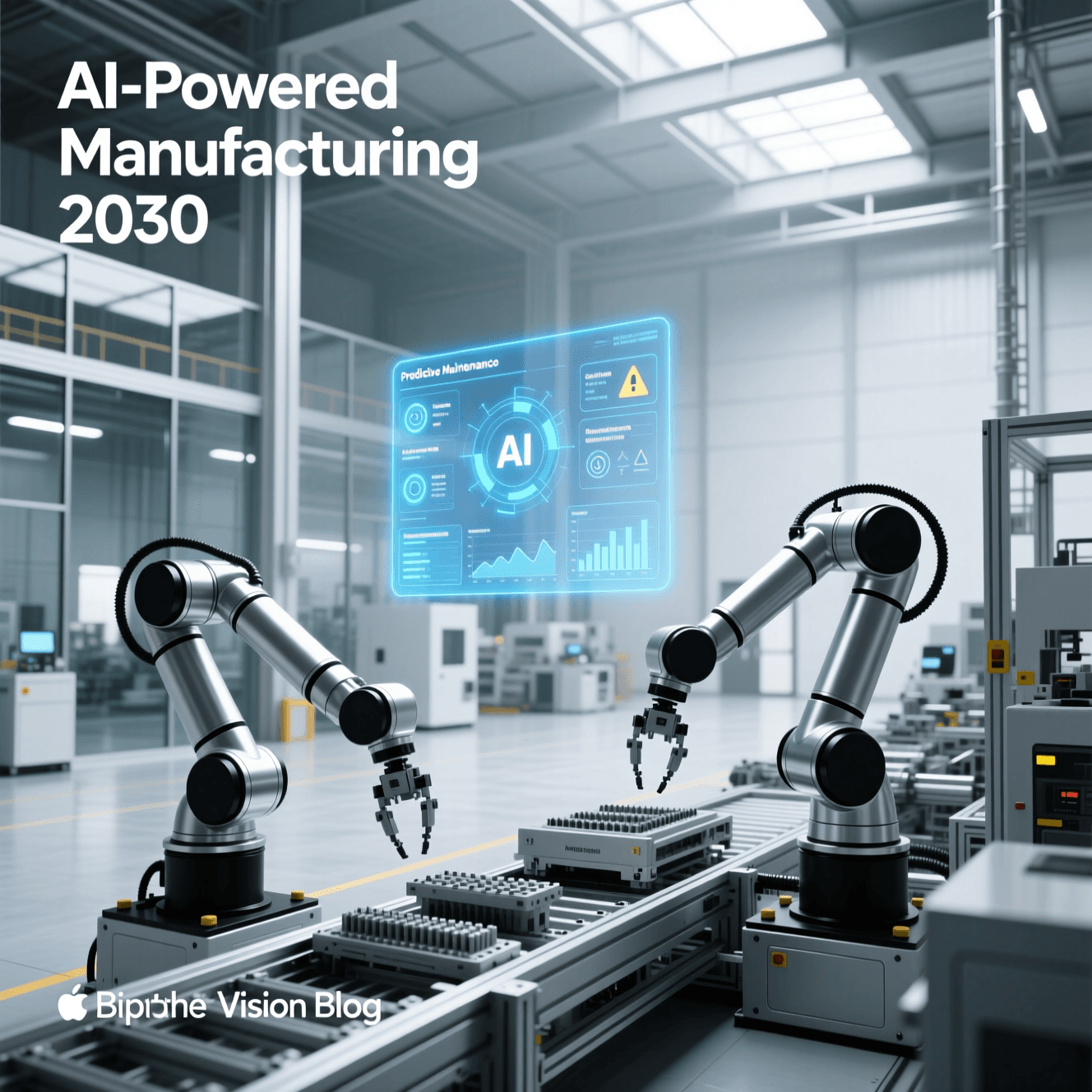
Siemens has integrated artificial intelligence as a core operational capability within its own manufacturing facilities, moving beyond pilot programs to scaled deployment across its Digital Industries segment. The company utilizes machine-learning models trained on real-time sensor data to anticipate equipment failures before they halt production, while simultaneously applying computer vision to detect microscopic defects in electronics assembly.
In its approach to predictive maintenance, Siemens collects vibration signatures, temperature readings, and power consumption data from factory sensors. These datasets are processed using edge inference to allow anomalies to be detected in real time, issuing early warnings days or weeks before failure occurs. External case studies referencing these internal deployments report downtime reductions of approximately 30% and asset-utilization improvements of 10–15% in comparable environments.
At the Amberg Electronics Plant in Germany, the company deploys high-resolution camera streams and convolutional neural networks to analyze solder joints and surface defects at production speed. This AI-based inspection workflow eliminates dependency on spot checks and has yielded concrete results, including built-in product quality reaching 99.9988% and a 75% reduction in scrap costs equating to €3.6 million annually. Overall equipment effectiveness at the facility increased from 70% to 85%, freeing over 6,000 operator hours per year for higher-value tasks.
In fiscal year 2025, Siemens reported revenues of €77.8 billion and invested €6.1 billion in research and development, much of it focused on software and data-driven technologies supporting digitalized industrial operations. The company continues to invest heavily in expanding AI-enabled maintenance, including generative AI interfaces layered on existing machine-learning models, signaling long-term operational maturity rather than experimentation.
Wichtige Erkenntnisse
Siemens has transitioned from experimental AI initiatives to mature, scaled deployments that deliver measurable financial and operational returns within its own factories.
The reported 75% reduction in scrap costs and significant uptime improvements demonstrate the viability of embedding intelligence directly into industrial workflows.
While specific plant-level savings remain partially undisclosed, the consistency of the metrics suggests a replicable model for the broader sector.
Continued investment in generative AI interfaces indicates a strategic commitment to sustaining these gains through evolving technology stacks.