Everyday Examples of Artificial Intelligence Driven by Mathematics
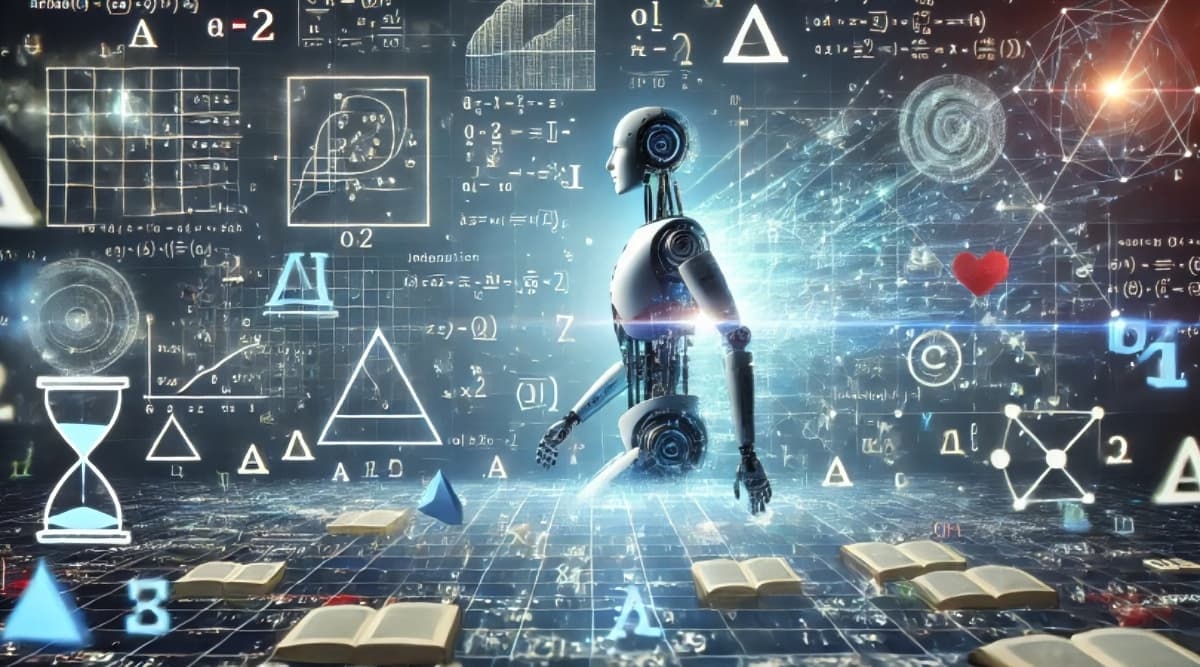
Artificial intelligence is often perceived as magic, but behind every smart system lies a set of mathematical rules. From the moment a user unlocks a phone to the time they receive a music recommendation, calculations occur silently in the background. Linear algebra powers image recognition, while calculus optimizes neural networks through backpropagation. According to the Stanford AI Index report covering data up to 2022, business adoption of AI has doubled over the last five years, driven not by philosophy but by computational scale. Practical applications demonstrate this reliance on probability and logic. In email management, Bayesian probability determines whether messages land in the inbox or junk folder. Gmail blocks more than 100 million spam emails daily using this method, analyzing words, sender patterns, and link structures to shift probability scores. Similarly, streaming platforms like Netflix and Spotify utilize collaborative filtering. By comparing user behavior with millions of others via matrix factorization, these systems identify patterns without explicitly knowing individual preferences. Navigation and security also depend heavily on graph theory and geometry. Google Maps predicts travel times and reroutes traffic using shortest-path algorithms like Dijkstra’s, adjusted dynamically by machine learning models trained on historical data. Over a billion kilometers are navigated through the service each day. On mobile devices, face recognition maps facial landmarks into numerical vectors. Apple’s Face ID claims a one-in-a-million false acceptance rate, achieved purely through vector distance thresholds rather than visual intuition. Finally, AI is impacting education through Optical Character Recognition and symbolic computation. These tools help students understand handwritten equations and verify results without replacing human problem-solving skills. The goal remains to save time on repetitive tasks and gain knowledge through alternative approaches. As computing power continues to grow, the integration of mathematics into daily digital life becomes increasingly seamless and essential. The primary takeaway is that modern artificial intelligence operates as mathematics executed at speed and scale rather than intuitive reasoning. Business uptake has doubled since 2017, indicating a shift toward practical algorithmic implementation over theoretical exploration. While AI assists in education and verification, it currently serves to augment human capability rather than replace independent thought. Future developments will likely depend on maintaining sufficient computing resources to run these complex equations efficiently.