Content
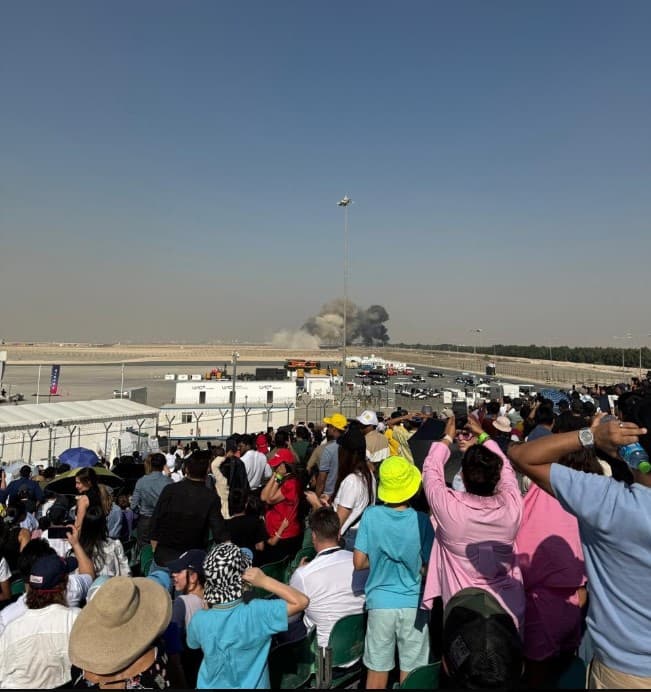
In a tragic incident at the Dubai Air Show, India's indigenous fighter jet, the LCA Tejas, crashed during an aerial display, resulting in the death of the pilot. Videos circulating on social media show the aircraft in a steep free fall close to the air show's venue, suggesting a possible power failure as the cause. Witnesses report the pilot chose to steer the aircraft away from populated areas instead of ejecting, sacrificing his own life to avoid civilian casualties. The Indian Air Force (IAF) has announced a formal inquiry, expressing deep condolences for the loss and vowing to uncover the circumstances behind the accident.
The Tejas program holds significant importance for India’s defense sector, having been developed over four decades as the country's effort to build a modern indigenous fighter jet. The jet is manufactured by Hindustan Aeronautics Limited (HAL) and is powered by the American-made General Electric (GE) F404-IN20 engine. This crash marks the second known accident involving the Tejas since its first test flight in 2001. The previous crash occurred last year in Rajasthan during a return from the tri-services exercise “Bharat Shakti.” Despite setbacks, the aircraft has been steadily inducted into the Indian Air Force with two operational squadrons actively flying the Mk1 variant.
Development of the LCA Tejas began in the 1980s under the Defence Research and Development Organisation (DRDO), with early hopes pinned on the indigenous Kaveri engine. Unfortunately, the Kaveri engine failed to meet the required thrust levels, forcing a shift to the GE F404 engine to power the aircraft. The first successful flight of the Technology Demonstrator was in January 2001, after which the aircraft was officially named 'Tejas,' meaning 'Radiance' in Sanskrit.
Orders for the aircraft progressed over the years, with the IAF initially placing orders for 20 LCA Mk1 jets in 2006 and another 20 in 2010. As of mid-2025, the Air Force operates two squadrons equipped with Tejas Mk1 fighters, and plans for greater expansion are underway. In 2021, the IAF ordered 83 Mk1A variants, with HAL securing a contract for 99 GE F404 engines to power these jets. However, delays in engine deliveries have pushed back production schedules. To ramp up output, HAL has expanded production lines and aims to increase annual manufacturing capacity significantly.
The Tejas fighter has made its mark internationally, participating in exercises like the UK tactical combat drills and UAE's Desert Flag, earning praise for its capabilities. India is also pushing the aircraft for export, with Brazil reportedly showing interest. However, this recent crash at a high-profile event like the Dubai Air Show presents a serious setback for India’s indigenous fighter jet ambitions, potentially impacting international perceptions and sales prospects.
Looking ahead, India continues to develop the next-generation Tejas Mk2 variant and expects to have a fleet exceeding 300 aircraft by 2035. The government recently inked a $7.5 billion deal for 97 Mk1A jets and a separate $1 billion contract for 113 GE engines, with deliveries scheduled from 2027 onwards. Prime Minister Narendra Modi even flew the Tejas earlier in November, highlighting the government’s commitment to the program despite challenges. The incident underlines the critical need for thorough investigations and enhanced safety measures to ensure the program’s long-term success.