Content
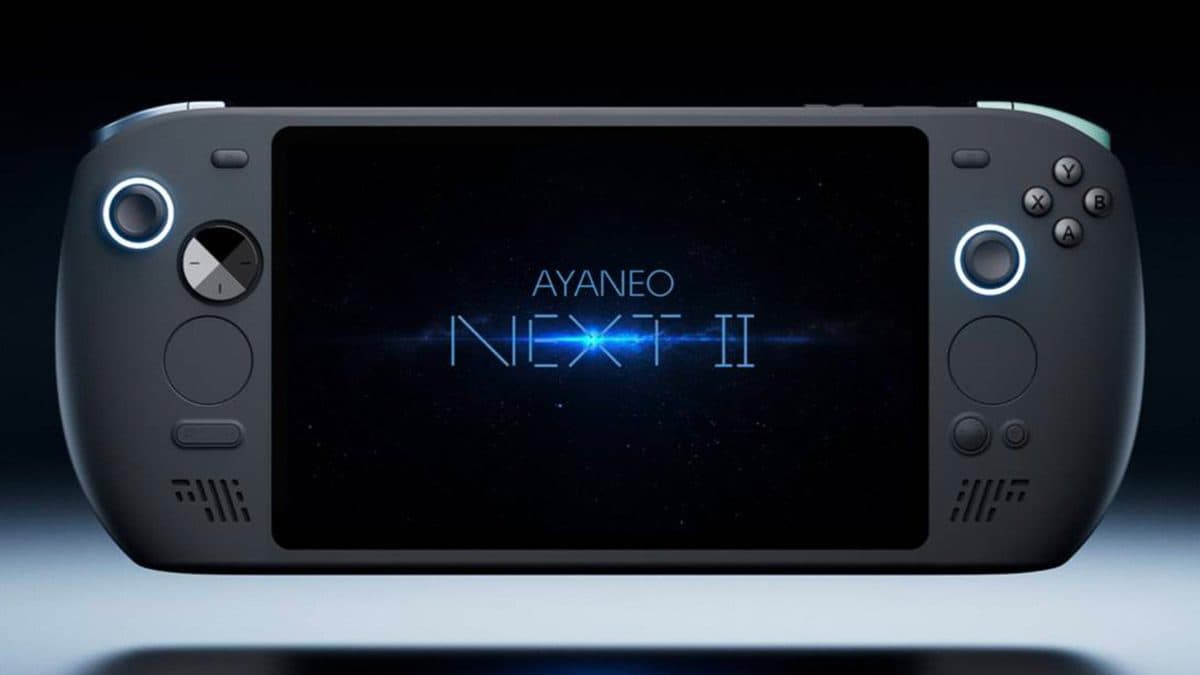
Over the recent holiday weekend, Ayaneo unveiled its latest creation, the Next II, an ambitious Windows-based handheld gaming PC designed to challenge and potentially surpass existing devices in the market. The new device is notably robust and packed with features, positioning itself as a high-end competitor to popular handhelds like the Steam Deck. It boasts a 9-inch OLED display that supports a refresh rate of up to 165Hz, coupled with a sharp resolution of 2400 by 1504 pixels and an impressive peak brightness of 1100 nits. These display specifications aim to deliver exceptional visual clarity and smooth gameplay experiences.
Powering the Next II is the AMD Ryzen AI Max+ 395 chipset, the same high-performance processor used in the Asus ROG Flow Z13 gaming laptop. This chip is well-regarded for its gaming capabilities, having helped the Asus laptop earn a 9 out of 10 rating for performance in IGN’s review earlier in the year. The handheld also supports an 85W thermal design power (TDP), which indicates its potential power consumption ceiling and underscores the device’s capacity for intense gaming sessions. To manage heat effectively, the Next II incorporates dual cooling fans.
Battery life is another area where Ayaneo appears to have made significant improvements. The Next II features a 115Wh battery, which is a notable upgrade over the 47Wh battery found in the original Ayaneo Next. It also surpasses the 80Wh battery capacity of competing devices like the Asus ROG Xbox Ally X. While this suggests the potential for longer usage between charges, the high 85W TDP might offset these gains depending on the gaming workload and system optimization.
In terms of controls, Ayaneo has taken inspiration from Valve by including two front touchpads that support customizable key mapping and gesture controls, enhancing user interaction and gameplay precision. The Next II is equipped with a comprehensive control layout: two Hall effect joysticks, Hall effect triggers featuring two-stage trigger locks, four bumper buttons, four face buttons, and four configurable rear buttons. It also includes an 8-way D-pad reminiscent of the design found on Microsoft’s Xbox Wireless Controller, providing a familiar and responsive input experience for gamers.
Ayaneo’s approach with the Next II clearly indicates a move to outpace competitors by delivering a feature-rich, performance-heavy handheld gaming device. While the company has not yet announced pricing or a release date, it is known for positioning its handhelds at the premium end of the market, as evidenced by the starting price of $1,265 for the Ayaneo Next Advance. Given the specifications and design philosophy, the Next II is expected to follow this trend, appealing to gamers who demand top-tier performance and are willing to invest accordingly. Overall, the Ayaneo Next II looks set to be a formidable entrant in the portable gaming PC sector, though its reception will ultimately depend on real-world performance and value proposition once available.