Content
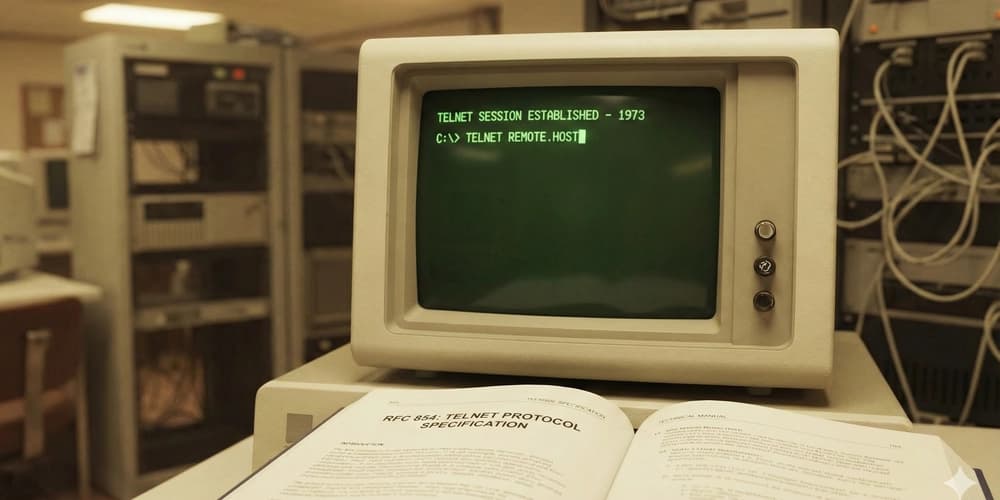
Telnet stands as a foundational protocol in the evolution of remote access technology, allowing users to connect to remote computers and operate them as if directly interfacing with their physical terminals. Originating from ARPANET research initiatives in the late 1960s, Telnet was among the earliest application protocols developed, predating even FTP. It set essential standards for remote command-line access and played a significant role in shaping the architecture of contemporary internet communication protocols.
At its core, Telnet is a client-server protocol that relies on the Transmission Control Protocol (TCP), typically using port 23 to facilitate communication. When a session is initiated, the client connects to the server and sends commands which are executed remotely, with the results relayed back immediately. This two-way communication model supports interactive control of the remote system's command-line interface. A notable feature of Telnet is its negotiation mechanism, where clients and servers exchange command sequences marked by the Interpret as Command (IAC) byte. This process enables dynamic adjustment of terminal options such as echo settings, binary transmission, terminal identification, and window size, optimizing communication between heterogeneous systems.
A key innovation within Telnet is the Network Virtual Terminal (NVT) abstraction layer. NVT provides a standardized interface that enables interoperability between diverse terminal types by using a canonical set of ASCII commands and control codes. This abstraction helps bridge compatibility gaps across different hardware and software environments by enforcing a common communication protocol based on 7-bit ASCII characters, standardizing control sequences, line endings, and special key functions.
Telnet’s historical context is rooted in the ARPA initiative, as it addressed the critical demand for remote connectivity to mainframe computers in the late 1960s. Initial implementations emerged in 1969 as some of the first on ARPANET, empowering researchers and scientists in geographically dispersed institutions to share limited computing resources. The protocol was formally standardized in 1983 through RFC 854 and RFC 855, coinciding with the transition from the Network Control Program (NCP) to TCP/IP as ARPANET's foundational suite. Telnet’s widespread adoption established foundational client-server interaction patterns that influenced many subsequent application-layer protocols.
In practical applications, Telnet became indispensable across various operational domains, including network management, system administration, and collaborative computing. It enabled administrators to remotely execute commands, configure devices, and manage files through text-based interfaces, effectively removing geographical barriers from system management. Network engineers widely used Telnet to configure routers, switches, and other infrastructure devices. System administrators relied on it for maintaining Unix and Linux servers, overseeing software installations, monitoring logs, and performing maintenance tasks without physical access. Educational institutions leveraged Telnet to provide students with remote access to shared computing resources for programming and code execution.
Telnet also served as a valuable diagnostic tool, allowing administrators to connect manually to different service ports such as SMTP, HTTP, or POP3 to troubleshoot network connectivity and protocol functionality. This capability established Telnet as an essential instrument for protocol analysis and network troubleshooting.
Despite these advantages, Telnet’s fundamental security limitations eventually led to its decline. The protocol lacks native encryption, transmitting all data, including login credentials, in plaintext. This vulnerability exposes Telnet sessions to interception and unauthorized access through packet sniffing, making them susceptible to man-in-the-middle attacks, session hijacking, and credential theft. Additionally, Telnet does not provide mutual authentication, host verification, or data integrity checks, preventing clients from confirming the legitimacy of the servers they connect to.
Due to these serious security flaws, Telnet has largely been replaced by Secure Shell (SSH) and other encrypted alternatives in production environments. SSH offers equivalent remote access capabilities with robust encryption, public key authentication, secure key exchange, and integrity verification. Modern operating systems and network devices typically disable Telnet by default or remove it entirely, promoting SSH as the standard for secure remote management.
Despite its obsolescence in secure environments, Telnet continues to hold relevance in specific contexts such as legacy system maintenance, educational laboratories, isolated networks where encryption overhead is undesirable, and network connectivity testing. Its simplicity and diagnostic utility preserve its presence as a niche tool within controlled and secure settings.