Content
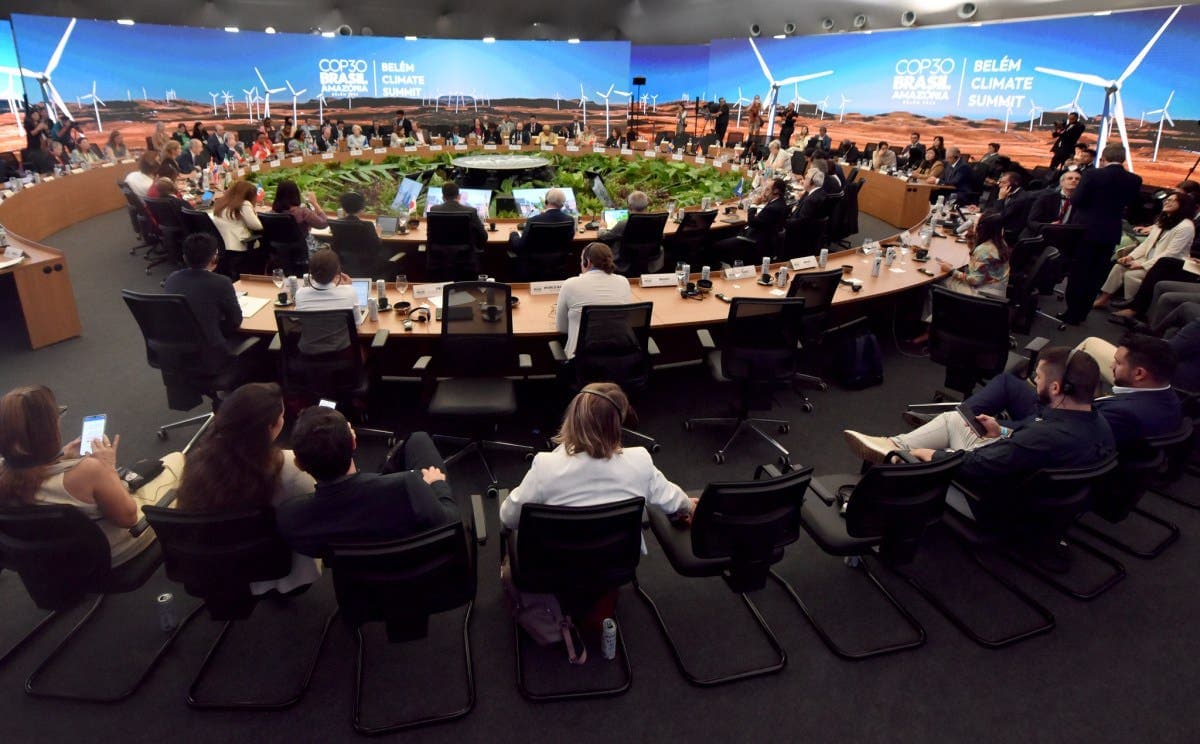
The 30th Conference of the Parties (COP30) climate negotiations kicked off in Belém, Brazil, a critical gateway to the Amazon rainforest, drawing attention to the urgent need for global action against climate change. Simon Stiell, the United Nations Climate Change Executive Secretary, opened the talks with a stark warning to wealthy nations, including the United States, emphasizing that no country is safe from the costly impacts of climate disasters. He highlighted that climate-driven extreme weather events are causing significant economic damage, slashing GDPs by double digits. Stiell criticized leaders who downplay or ignore climate change, referencing President Donald Trump's withdrawal from the Paris Agreement and dismissive comments about the climate crisis. He stressed that countries failing to act risk falling behind economically, missing out on the transformative growth opportunities presented by the clean energy transition.
Attending leaders face a packed agenda aimed at increasing climate finance, accelerating the shift to renewable energy, and enhancing protections for the world's major forests. Brazilian President Luiz Inácio Lula da Silva called for a "COP of truth," urging nations to confront scientific realities and exhibit the determination needed to make meaningful changes. Marking several milestones, COP30 commemorates the 1992 Earth Summit where the UN Climate Convention was born and the 10th anniversary of the Paris Agreement. Despite progress, current national pledges remain insufficient to keep global warming within the Paris targets of limiting temperature rise to no more than 2 degrees Celsius, preferably 1.5 degrees, above pre-industrial levels. Recent data reveals the past two years as the hottest on record, with 2025 projected to be among the warmest yet, underscoring the urgency of enhanced commitments.
While political headwinds persist, especially with the US pulling back from climate goals and influencing others to do the same, momentum in clean energy deployment offers a glimmer of hope. Ashvin Dayal of the Rockefeller Foundation notes that despite federal rollbacks, renewable energy and battery storage have dominated new electric capacity additions in the US this year. The falling costs of solar and storage technologies are driving adoption globally, with countries like India demonstrating that renewables are increasingly cheaper than coal-fired power. This economic shift provides a vital tailwind for the energy transition, even as policy support remains critical to accelerate progress.
Beyond energy, the Amazonian setting of COP30 spotlights the crucial role of forest conservation in climate mitigation. This is the first COP hosted in the Amazon region, with a particular focus on reducing deforestation. Ahead of the conference, European nations, the UK, and the World Bank pledged over $2.5 billion to protect the Congo Basin forests in Africa. Brazil introduced the Tropical Forests Forever Facility (TFFF), an innovative financial mechanism designed to reward countries for protecting forested areas. Instead of relying on periodic donations, the TFFF plans to create a sustainable investment fund that generates continuous returns to pay tropical forest nations for their conservation efforts. UNEP officials see this as a promising approach to finally bridge the vast funding gap that has limited past forest protection initiatives.
As COP30 unfolds, the challenge remains immense: to mobilize sufficient climate finance, strengthen international cooperation, and implement robust policies that enable a swift transition to a low-carbon economy while safeguarding vital ecosystems. The outcomes of these talks will be pivotal not only for the Amazon and global forests but also for the economic and environmental resilience of nations worldwide.