
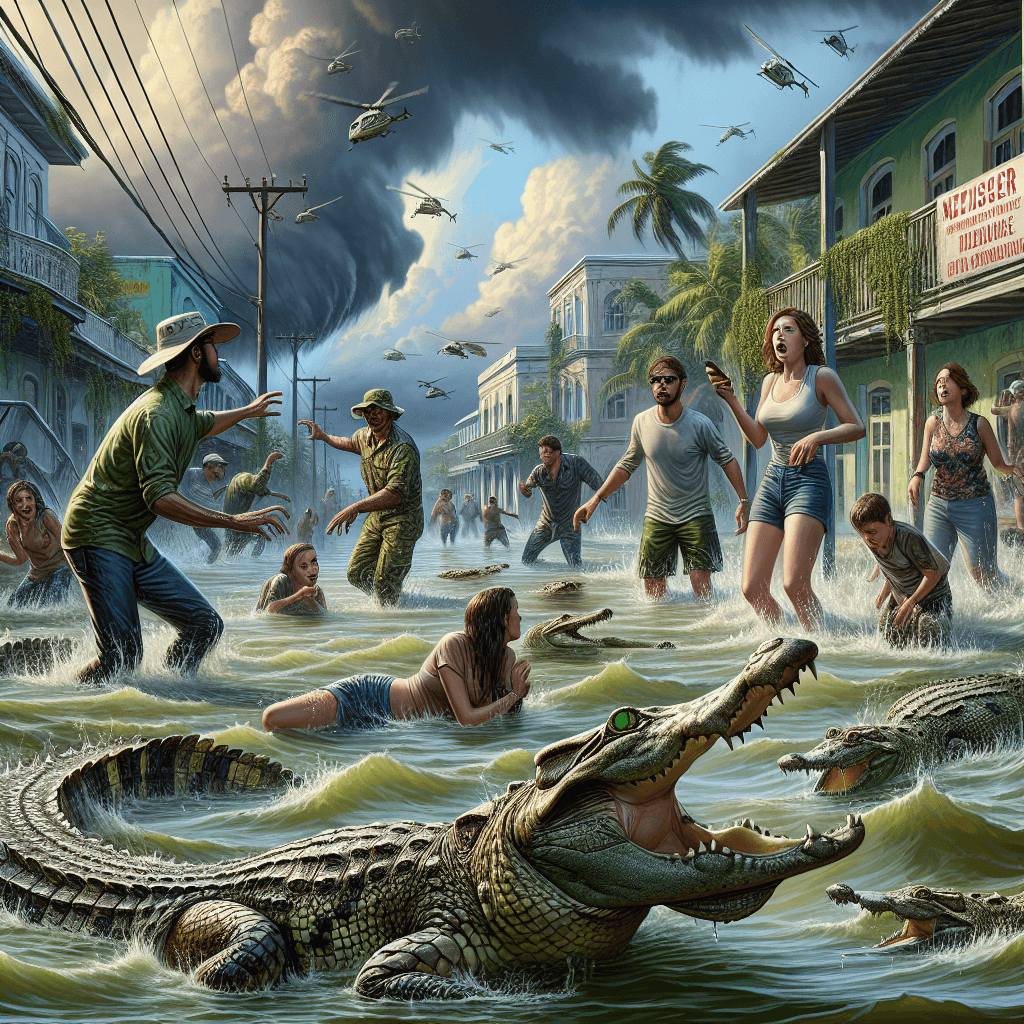
Americans stranded in the Caribbean warned of CROCODILES roaming the streets as Hurricane Melissa chaos sees Jamaica plead with Trump for emergency help
Content
Key Insights
Hurricane Melissa made landfall in Jamaica as a Category 4 storm with 185 mph winds on October 28, 2025, causing catastrophic damage and prompting emergency requests for aid from the Jamaican government to the Trump administration.
Key facts include the displacement of dangerous crocodiles into residential areas due to flooding, multiple reported deaths, and the storm’s intensity surpassing that of Hurricane Katrina in 2005.
Direct stakeholders are Jamaican residents, local authorities, and stranded tourists, while peripheral groups include international aid agencies and governments involved in relief efforts.
Immediate impacts involve widespread flooding, infrastructure damage, and heightened public safety risks from displaced wildlife, disrupting daily life and emergency operations.
Historically, the parallels to Hurricane Katrina highlight the potential scale of destruction and the critical nature of efficient disaster response.
Looking ahead, optimistic projections focus on leveraging improved communication technology and international cooperation to enhance recovery, while risk scenarios emphasize the need for better wildlife management and flood mitigation strategies.
From a regulatory perspective, recommendations include (1) prioritizing rapid deployment of emergency response teams to affected zones, (2) implementing community education programs on wildlife hazards during floods, and (3) enhancing cross-border disaster communication protocols.
The first bears high outcome significance with moderate complexity, the second is low complexity with steady impact, and the third requires more coordination but is vital for future crisis management.