
Astronomers Catch a Ring System Forming Around Chiron in Real Time
Content
Key Insights
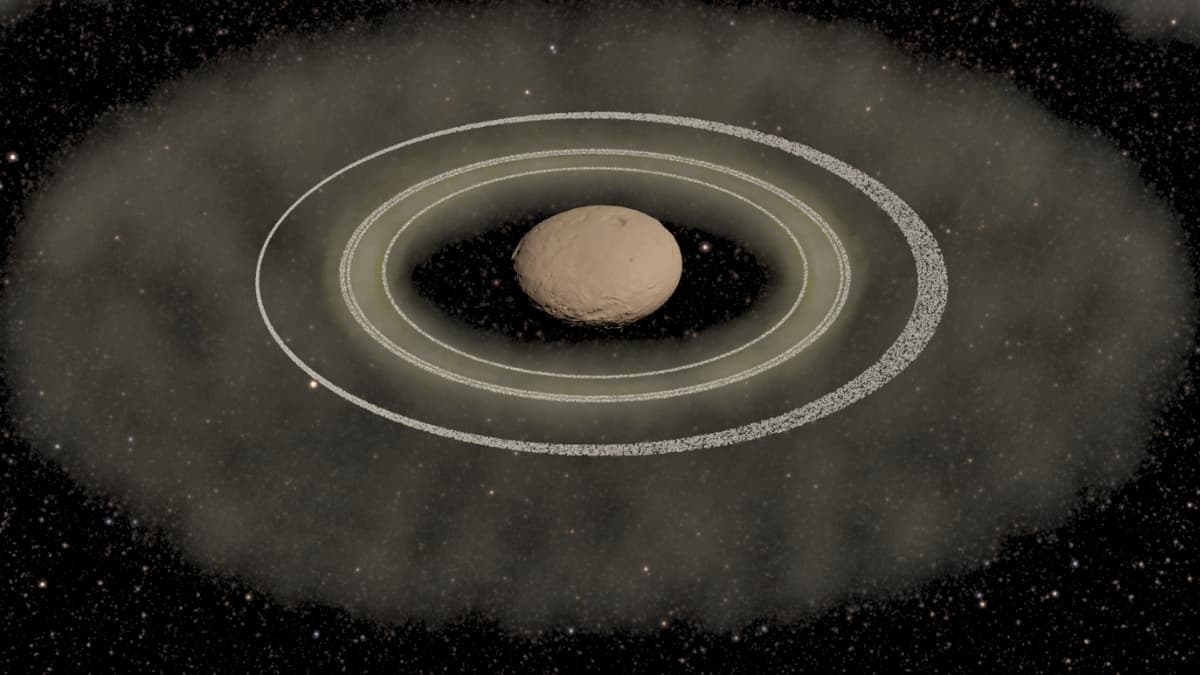
Key facts include the 2023 occultation of Chiron observed from multiple South American sites, revealing dynamic ring structures at varying distances from the centaur.
This event highlights that Chiron's ring system is actively evolving, likely formed from material ejected during a comet-like outburst around 2021.
Stakeholders directly involved are astronomers and planetary scientists studying minor bodies, while indirectly affected groups include space mission planners and educators relying on up-to-date solar system models.
Immediate impacts include a shift in understanding ring formation around small bodies, contrasting with previous knowledge limited to stable planetary rings.
Historically, this can be compared to the discovery of Chariklo's rings in 2013, where observational techniques improved understanding of small body ring systems.
Looking ahead, the findings offer optimism for advancing models of ring dynamics and small body evolution but also present risks in interpreting transient phenomena without long-term data.
From a regulatory standpoint, three recommendations emerge: prioritize funding for continued occultation monitoring (high impact, moderate complexity), develop collaborative international observation networks (medium impact, moderate complexity), and invest in simulation tools for small body ring dynamics (high impact, higher complexity).
These measures will enhance data quality, global scientific coordination, and theoretical frameworks necessary for comprehensive understanding of evolving ring systems.