
Donald Trump Accused of 'Chickening Out' From Asking Chinese President Xi Jinping About Taiwan Conflict
Content
Key Insights
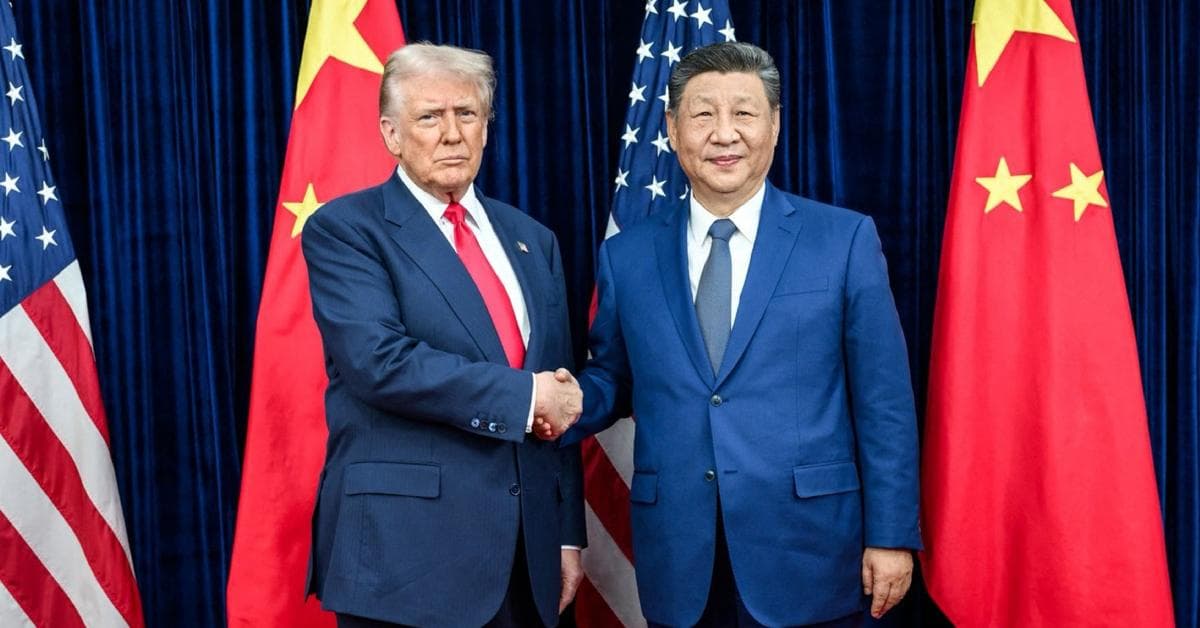
The article centers on the October 2025 meeting between US President Donald Trump and Chinese President Xi Jinping, focusing on the contentious issue of Taiwan's status.
Key facts include Trump's claim that the Taiwan conflict was not discussed, the subsequent public backlash branding him with the "TACO" nickname, and the broader implications for US-China relations.
Direct stakeholders are the US and Chinese governments, Taiwan, and the international community monitoring regional stability, while peripheral groups include global markets and allied nations reliant on US foreign policy.
Immediate impacts involve criticism of Trump's diplomatic approach and potential shifts in perceptions of US leadership strength amid rising cross-strait tensions.
Historically, parallels can be drawn with the 1995-96 Taiwan Strait Crisis, where firm US military and diplomatic resolve helped deter conflict, contrasting with the current episode's ambiguity.
Optimistic scenarios envision renewed diplomatic engagement and clearer US commitments, whereas risk scenarios warn of escalating Chinese assertiveness and diminished US influence, potentially destabilizing the Indo-Pacific region.
From a regulatory perspective, recommendations include establishing a clear communication strategy on Taiwan policy (high priority, moderate complexity), enhancing multilateral diplomatic coalitions to support regional security (medium priority, high complexity), and instituting contingency planning for rapid response to cross-strait crises (high priority, high complexity).
These measures aim to restore confidence in US foreign policy and mitigate the risks of miscalculation in a volatile geopolitical environment.