Content
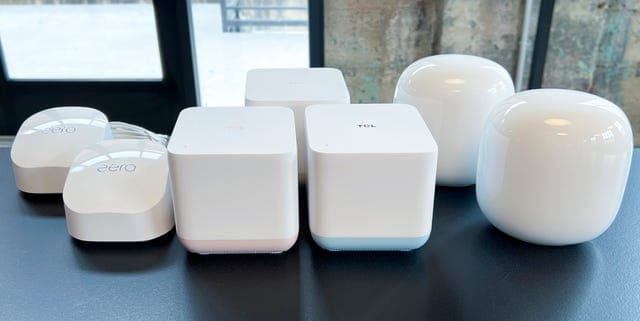
If you're tired of internet dead zones in your home, mesh WiFi systems are increasingly becoming the go-to solution. Among the many options available, the Eero 6+ stands out with its integration of WiFi 6 technology, enabling it to handle the bandwidth needs of numerous connected devices simultaneously. Amazon has also embedded Thread and Zigbee protocols into each Eero unit, turning them into smart-home hubs capable of managing various gadgets. The Eero app is sleek and visually rich, offering advanced controls such as ad-blocking and app-specific restrictions—features that set it apart. Plus, Alexa integration means you can control your network with simple voice commands. While the system covers up to 3,000 square feet with a base and satellite, its speed does take a hit when signals stretch to the farthest corners, dropping to about 51 Mbps download during range tests. Still, it manages multiple smart devices and streaming/gaming demands pretty well.
Google's Nest WiFi hits a sweet spot between price, design, and performance. Known for its clean, subtle look, it’s super easy to set up and works wonders in both small apartments and larger multi-level homes. Starting coverage is around 2,200 square feet, with each additional "point" adding about 1,600 square feet, potentially reaching 5,400 square feet. It neatly integrates with the Google smart home ecosystem and doubles as smart speakers supporting Google Assistant. The Nest WiFi Pro, a tri-band model, delivered the fastest speeds in tests with up to 803 Mbps on the same floor, and it’s great for gigabit internet plans. Its interface is simpler than Eero’s, lacking some advanced blocking features, but it’s straightforward and organized, making management hassle-free.
For those who want a blend of speed and coverage, the Asus ZenWifi AX is a strong contender. It covers up to 5,000 square feet with a two-device tri-band setup and offers blazing-fast speeds reaching up to 6.6 Gbps. The system supports advanced encryption and lets users customize backchannels through its app. Setup is simple, and it includes three gigabit ethernet ports, making it versatile for wired connections. While its design is solid, some might find the physical size of the routers a bit bulky.
Netgear’s mesh systems are well-established in the router market and bring reliable performance with excellent coverage and streaming capabilities. Their Orbi line supports Alexa and offers a wide range of ethernet ports—four on the two-pack model covering 5,000 square feet, with options to expand coverage to up to 10,000 square feet using additional satellites. The color-changing rings indicating signal strength are a neat design touch. However, the towers are quite large, nearly nine inches tall, which might be inconvenient for some setups.
At the premium end, the Netgear Orbi AX6000 is aimed at users demanding the fastest speeds and broad coverage, with support for multiple floors and complex home layouts. It boasts built-in malware protection and advanced security features like touch ID and two-factor authentication. Coverage is roughly 5,000 square feet for the base pack, extendable with extra units. The downside is its hefty price tag, hovering around $600, and its large physical size, which may not suit every home environment.
All these mesh WiFi systems prove effective in eliminating dead zones and supporting numerous devices simultaneously. Your choice depends largely on home size, budget, and desired features like advanced parental controls, smart home integration, or maximum speeds. Whether you want something with extensive app controls like Eero, the simplicity and speed of the Nest WiFi Pro, or the raw power of Netgear’s Orbi AX6000, there’s a solution tailored to your needs.