Here's How Much Hurricane Melissa Was Worsened by Climate Change
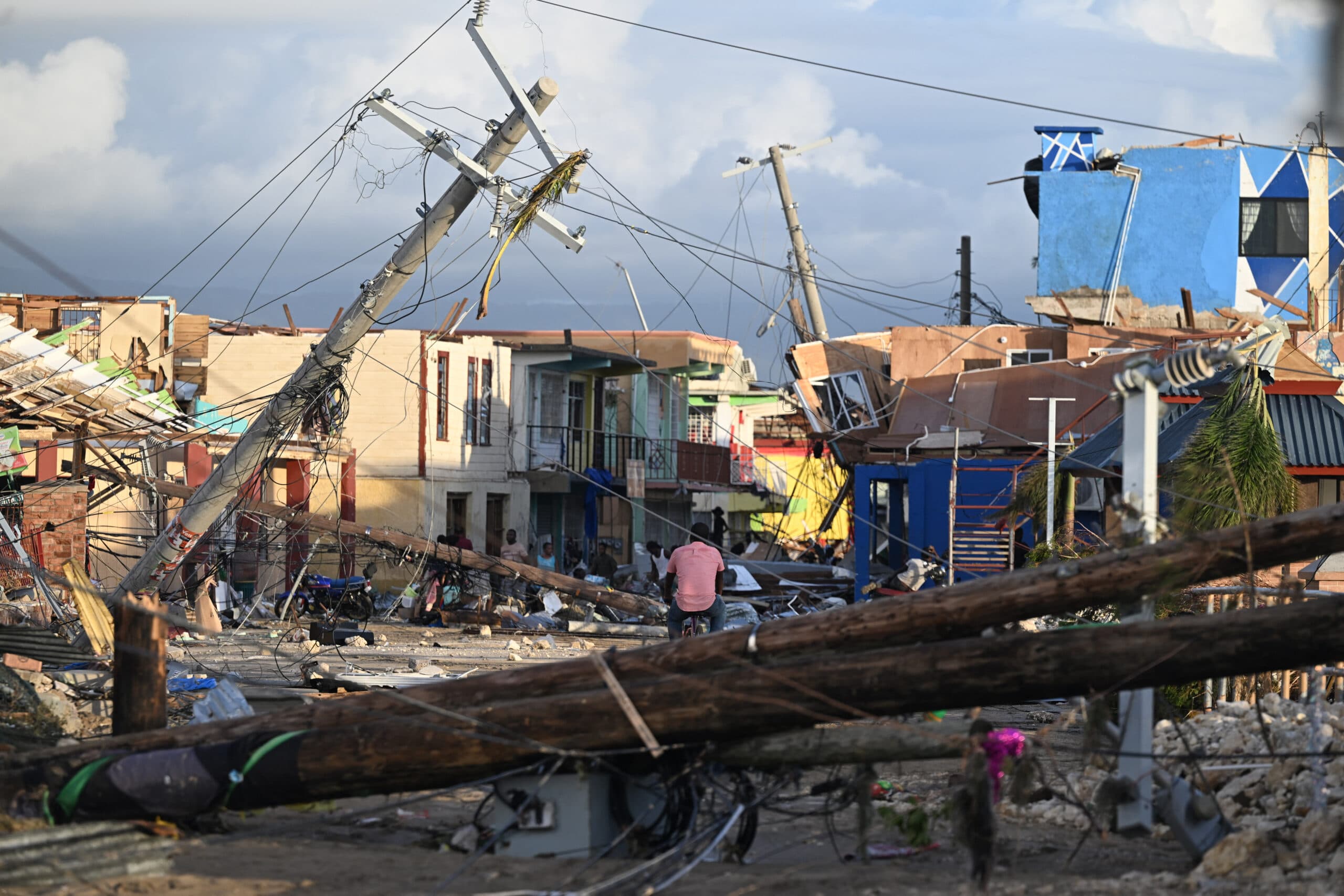
Hurricane Melissa made history as the most powerful storm to ever strike Jamaica, with its unprecedented strength being partly attributed to the effects of climate change. According to a recent analysis by World Weather Attribution (WWA), the storm's intensity was amplified by warmer waters and increased moisture in the air, both consequences of global warming. With winds peaking at 185 mph just before hitting Jamaica, Melissa ranks among the strongest Atlantic storms on record. The WWA study revealed that these extreme wind speeds were roughly five times more likely to occur and 7% stronger due to climate change. This is a critical insight, given that even small increases in wind speed can cause exponentially greater damage. In addition to fierce winds, Melissa brought torrential rainfall. The storm's five-day total rainfall was around 30% heavier than what would be expected without human-induced greenhouse gas emissions in Jamaica. The situation was even more dramatic in eastern Cuba, where Melissa made landfall a day later; climate change made such intense rainfall nine times more likely there. Much of this heightened intensity is linked to the Caribbean Sea, which was nearly 1.5°C warmer than average. This warmth extended deep into the sea, providing a substantial energy reserve that fueled the storm's power. The probability of such high sea surface temperatures was six times greater due to the current climate changes. The human toll and economic damage from Hurricane Melissa have been devastating. Dozens lost their lives across Jamaica, the Dominican Republic, and Haiti, as reported by the United Nations. Jamaica’s Prime Minister Andrew Holness estimated the losses to possibly reach $7 billion, which is roughly one-third of the country's entire 2024 GDP. Insurance estimates by Verisk Analytics put the upper bound for insured losses at $4.2 billion, a figure that reflects the fact that less than 20% of Jamaican homes have insurance coverage. This financial blow comes as Jamaica continues to recover from last year’s Hurricane Beryl, compounding the hardship. Roop Singh, an extreme weather attribution expert working with WWA and the Red Cross Red Crescent Climate Centre, emphasized the compounded difficulty created by back-to-back disasters like these. He noted that repeated shocks make it much harder for affected communities to fully recover, especially when ongoing flooding and landslides cut off access to many areas. As rescue and recovery efforts proceed, the full scope of Hurricane Melissa’s impact is still becoming clear, highlighting the urgent need to address the growing role of climate change in intensifying such natural disasters. The analysis of Hurricane Melissa centers on its record-breaking impact in Jamaica and eastern Cuba during early November 2025, with critical data points including wind speeds reaching 185 mph, 30% increased rainfall in Jamaica, and a sea surface temperature 1.5°C above average in the Caribbean. Direct stakeholders encompass local governments, affected populations in Jamaica, the Dominican Republic, and Haiti, as well as insurance and disaster response agencies, while peripheral groups include regional economies and global climate policy makers. Immediate consequences include significant human casualties, major infrastructure damage, and disrupted recovery efforts from previous storms, echoing challenges seen during Hurricane Beryl (2024) and Hurricane Irma (2017), where increased storm intensity linked to warming oceans similarly overwhelmed response capacities. Looking ahead, innovations in climate-resilient infrastructure and early warning systems offer hope for mitigating future damage, but escalating sea temperatures and extreme weather patterns present heightened risks requiring urgent adaptation strategies. From a regulatory standpoint, priorities should focus first on enhancing insurance penetration to improve financial recovery, second on strengthening community-based disaster preparedness programs, and third on enforcing stricter emissions controls to address root causes. These steps vary in complexity and impact but collectively form a balanced approach to confronting the multifaceted threats posed by climate-amplified hurricanes.