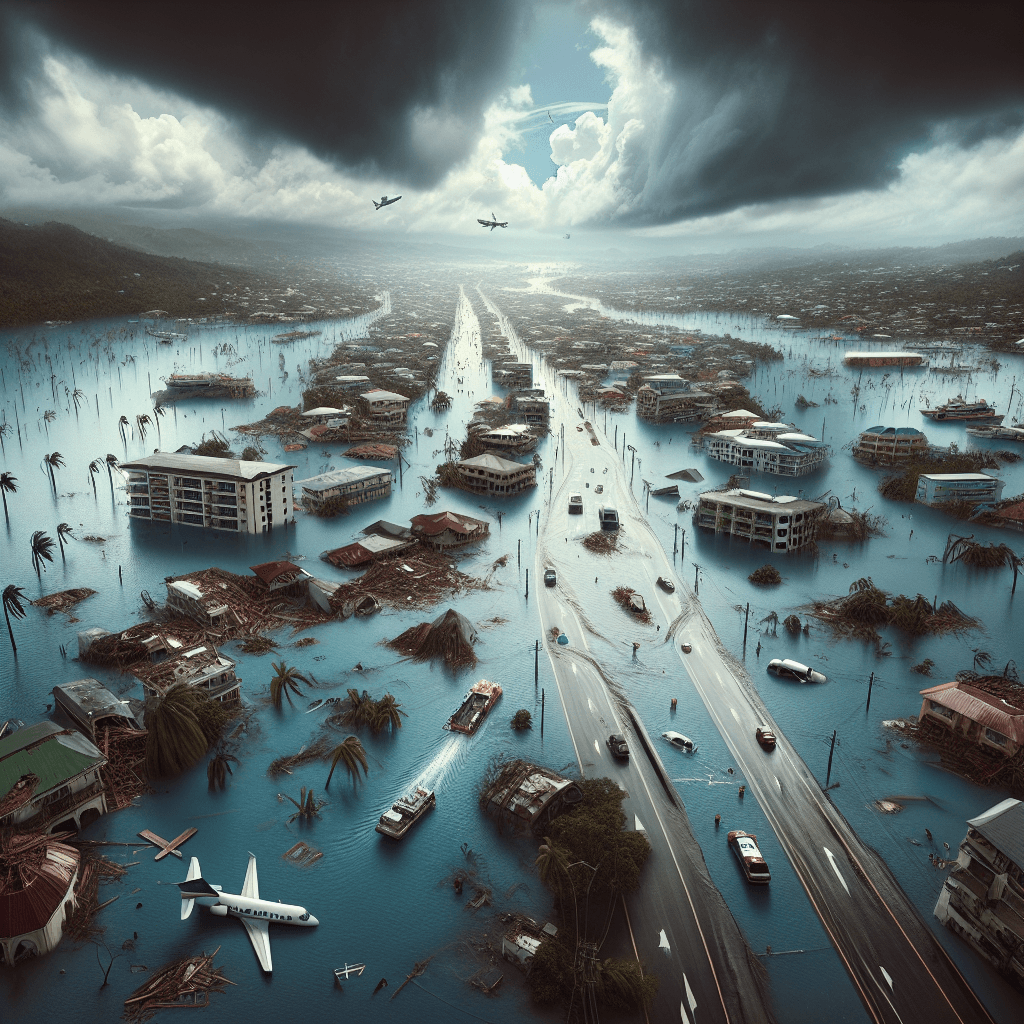
Jamaica is a 'disaster zone', airport is flooded, entire towns are underwater and tens of thousands of tourists are trapped after 'Storm of the Century' Hurricane Melissa hit
Published: October 29, 2025 at 02:10 PM
News Article
patent
-copyright-and-trademark
business-strategy-and-marketing
business-information
economy
-business-and-finance
minister-or-secretary-(government)
Content
Jamaica has been declared a disaster zone following the devastating impact of Hurricane Melissa, which has been dubbed the 'Storm of the Century.' The hurricane unleashed severe flooding, submerging entire towns and leaving tens of thousands of tourists stranded across the island. Reports indicate that the main airport is flooded, severely hampering rescue and relief operations. Jamaican Prime Minister Andrew Holness described the situation as dire, emphasizing the need to prevent exploitation as citizens struggle to secure essential supplies like food and water in the aftermath.
The storm, considered the most powerful ever recorded in the Caribbean, forced about 15,000 locals to seek refuge in emergency shelters. Authorities also reported that roughly 530,000 people are currently without electricity, compounding the difficulties faced by communities already dealing with extensive property and infrastructure damage. Despite the widespread devastation, officials confirmed that no new fatalities have been reported since the hurricane made landfall in Jamaica, although seven deaths occurred during preparations across the region, including Haiti and the Dominican Republic.
After battering Jamaica, Hurricane Melissa weakened somewhat but continued its destructive path as it moved toward Cuba, making landfall there in the early hours. The intensity of Melissa has been compared to Hurricane Katrina, which struck New Orleans in 2005, causing catastrophic damage and a high death toll. Melissa's force surpassed Katrina’s, raising concerns about the potential scale of destruction and the long-term recovery efforts that will be necessary for the Caribbean nations affected.
The situation has sparked urgency among local and international agencies to mobilize disaster response efforts. Emergency services are focused on ensuring continued access to food, clean water, and medical supplies, especially for those trapped in flooded areas. The flooding of key infrastructure, including the airport, complicates the arrival of aid and evacuation of stranded tourists, increasing the pressure on rescue teams and government officials.
Communities across Jamaica are grappling with the aftermath, with many residents facing the loss of homes and livelihoods. Power outages linger, and the risk of waterborne diseases rises as floodwaters remain stagnant in parts of the island. The government has called for cooperation and vigilance, urging individuals to remain in shelters until conditions improve. Meanwhile, relief organizations prepare for a prolonged recovery phase that will require significant resources and coordination.
As Hurricane Melissa moves onwards, the Caribbean braces for further impacts, with Cuba now facing the brunt of the storm. The scale of this disaster underscores the vulnerability of the region to increasingly severe weather events, likely exacerbated by climate change. The coming weeks will be critical for recovery efforts, disaster mitigation planning, and support for affected populations.
Ultimately, Melissa’s destruction serves as a stark reminder of the catastrophic potential hurricanes carry and the necessity for robust preparedness and response strategies. Jamaica’s declaration of disaster status marks the beginning of what will be a challenging road to rebuilding and resilience for the island and its people.
Key Insights
The core facts reveal that Hurricane Melissa struck Jamaica on October 28, 2025, causing massive flooding that submerged towns and trapped tens of thousands of tourists.
The storm led to a disaster declaration by the Jamaican government, with over half a million people losing power and 15,000 sheltering from the storm.
Stakeholders directly involved include the Jamaican government, local communities, tourists, and emergency services, while neighboring countries like Cuba, Haiti, and the Dominican Republic face secondary impacts.
Immediate consequences involve widespread infrastructure damage, displacement, and significant challenges in relief logistics due to flooding of the airport.
Drawing comparison to Hurricane Katrina (2005), both storms caused immense destruction and disruption, but Melissa’s impact on a smaller island nation poses unique recovery obstacles.
Looking ahead, optimistic scenarios envision advances in disaster preparedness and climate resilience, while risk scenarios highlight the potential for worsening storm impacts due to climate change and resource constraints.
From a regulatory authority perspective, three priorities emerge: enhancing early-warning systems tailored to island topographies (high priority, medium complexity), investing in resilient infrastructure to withstand flooding (medium priority, high complexity), and streamlining inter-agency coordination for rapid disaster response (high priority, low complexity).
These measures aim to reduce future vulnerabilities and improve response efficiency in the Caribbean region.
Jamaica is a 'disaster zone', airport is flooded, entire towns are underwater and tens of thousands of tourists are trapped after 'Storm of the Century' Hurricane Melissa hit | AI-U News