Content
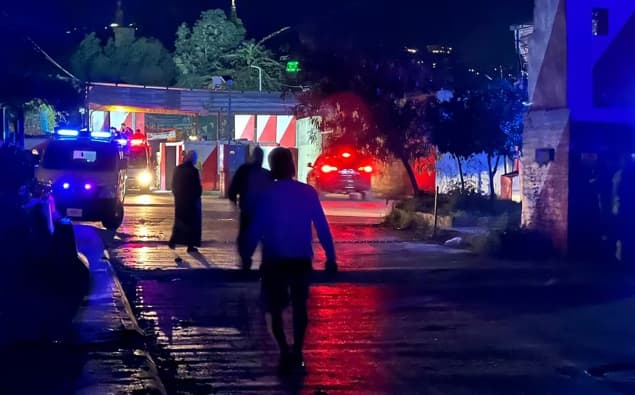
Lebanon reported that an Israeli strike on Tuesday night targeted the Ain al-Helweh Palestinian refugee camp in the country's south, killing at least 13 people and injuring many more. The camp, located near Sidon, is the largest Palestinian refugee settlement in Lebanon. The Israeli military said it had struck a Hamas compound in the area, claiming they were targeting terrorists operating within a Hamas training site. However, Hamas vehemently denied any military presence in the camps, labeling Israel's claims as falsehoods. Witnesses and local medics described chaotic scenes with firefighters battling blazes while gunmen fired shots to clear the way for ambulances rushing the wounded to nearby hospitals.
The Lebanese Health Ministry confirmed the death toll and stated that rescue efforts were ongoing. The state-run National News Agency reported the strike hit a car near the Khalid bin al-Walid Mosque and later also targeted the mosque and a nearby center sharing the same name. Despite these claims, an AFP correspondent on the scene did not observe damage to the mosque building. Rescue workers, however, were reportedly retrieving body parts from the vicinity, indicating the severity of the attack. This strike is part of a series of Israeli operations against targets in Lebanon, despite a ceasefire agreed last November aimed at halting hostilities with Hezbollah, a close ally of Hamas.
Israel usually directs its military actions against Hezbollah, which receives backing from Iran, but it has also conducted strikes against Hamas operatives inside Lebanon. Amid rising tensions following Hezbollah's rocket attacks on Israel since October 2023, the Lebanese government, under pressure from the United States and fearing further escalation, has begun efforts to disarm Hezbollah and other armed groups. Palestinian President Mahmoud Abbas and Lebanese President Joseph Aoun agreed earlier this year to hand over weapons from Palestinian camps to Lebanese authorities. While some factions in Ain al-Helweh have complied, Hamas has not announced any plans to disarm in Lebanon.
Meanwhile, violence continued in the occupied West Bank where two Palestinian teenagers launched a knife attack, killing an Israeli civilian and wounding three others. The attack occurred at Gush Etzion Junction, a key crossroads among Israeli settlements south of Jerusalem. Israeli forces responded with lethal force, killing the attackers and reportedly finding explosives in their vehicle. The victim was identified as Aharon Cohen, a 71-year-old resident of the nearby settlement Kiryat Arba. Among the wounded was a woman in serious condition who had suffered a gunshot wound, likely from Israeli security personnel responding to the attack.
The Palestinian Civil Affairs Authority named the attackers as two 18-year-olds from Hebron, and Israeli and Palestinian militant groups praised the assault, framing it as retaliation against Israeli policies and aggression in the West Bank and Jerusalem. The Gush Etzion region has a history of such attacks, and local Israeli officials have vowed harsh responses. The Yesha Council blamed the Israeli government's refusal to annex the West Bank for fueling violence. Since the Gaza war ignited in October 2023, violence in the West Bank has surged, with over 1000 Palestinians killed by Israeli forces or settlers and at least 44 Israelis killed in attacks or military operations.
The attack came a day after Israeli forces dismantled an illegal settler outpost in the Gush Etzion area, and after incidents of arson against Palestinian homes and vehicles nearby. Israeli Prime Minister Benjamin Netanyahu condemned the settler violence but pledged to deal firmly with extremist elements. The complex security situation in the West Bank and southern Lebanon reflects a broader regional conflict that remains volatile with no clear resolution in sight.