
Mumbra train deaths: 5 months later, 2 Central Railway engineers booked for ‘negligence’
Content
Key Insights
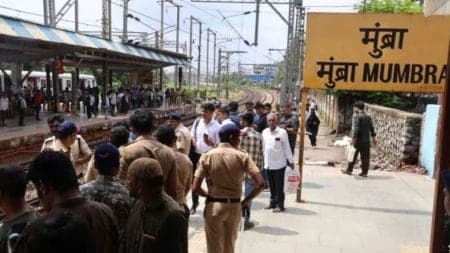
The Mumbra train accident on June 9, 2025, involved two overcrowded trains passing on a sharp curve between Diva and Mumbra stations, leading to four deaths and multiple injuries.
Key stakeholders include the Central Railway engineers responsible for speed and track clearance specifications, the Government Railway Police conducting the investigation, and the commuting public affected by the incident.
Immediate consequences involved heightened safety scrutiny and legal actions against officials, alongside public concern over overcrowding and track safety.
Historical parallels can be drawn with past suburban rail accidents where overcrowding and infrastructure constraints played roles, such as the 2017 Mumbai local train derailment, which led to renewed focus on maintenance and crowd management.
Going forward, optimistic trajectories emphasize innovation in real-time monitoring systems and infrastructure upgrades, while risk scenarios suggest potential for recurrence without enhanced regulatory oversight and stricter maintenance protocols.
From a regulatory perspective, recommendations include (1) revising and enforcing speed limits on curved tracks with higher precision, (2) upgrading track infrastructure to improve lateral clearances and accommodate operational dynamics, and (3) instituting stringent crowd management policies during peak hours.
Prioritization favors immediate speed regulation enforcement for quick impact, followed by infrastructure investments, with crowd control measures requiring coordinated multi-agency efforts.
This layered approach aims to reduce accident risks while addressing systemic challenges inherent to Mumbai’s suburban railway network.