
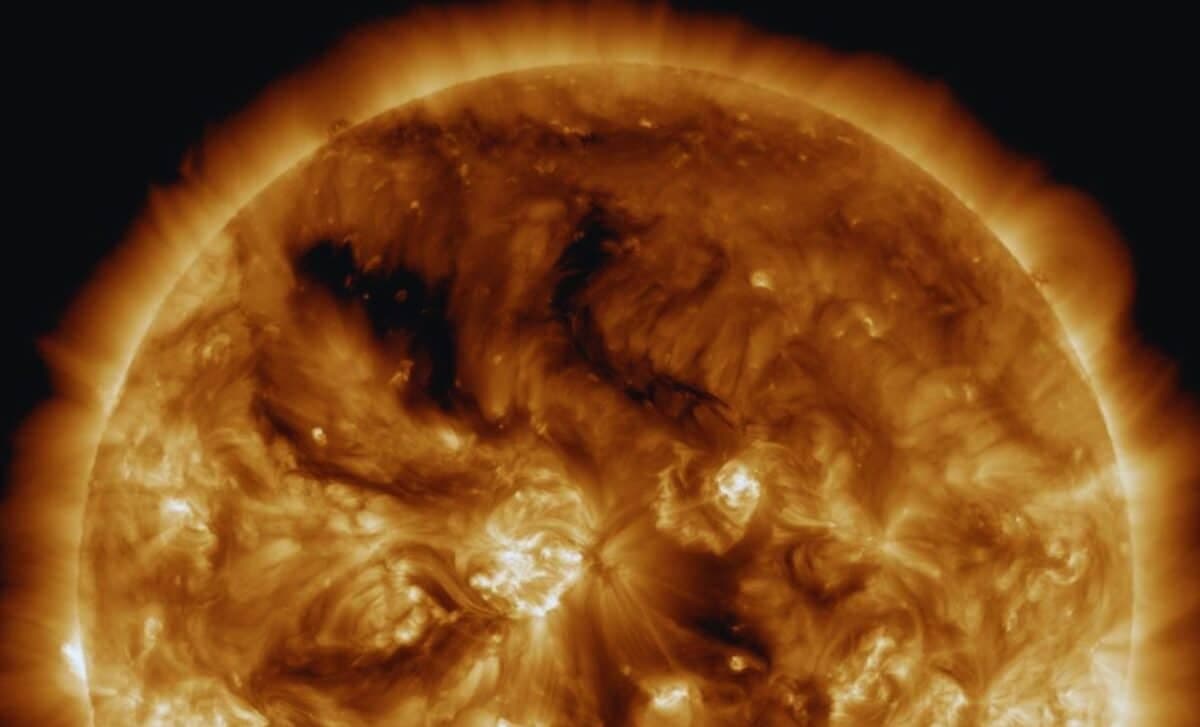
NASA Catches Spooky Face on the Sun Days Before Halloween
Content
Key Insights
The core facts extracted include the capture of a jack-o’-lantern-like face on the Sun by NASA’s Solar Dynamics Observatory on October 28, the formation of this pattern by magnetic active regions and coronal holes, and the potential for resulting solar wind to cause geomagnetic storms impacting Earth.
Key stakeholders involved are NASA, NOAA forecasters, satellite operators, communication networks, and populations in northern latitudes susceptible to auroral displays.
Immediate impacts include possible G1 to G2-class geomagnetic storms, increased aurora visibility at lower latitudes, and mild disruptions to satellite and communication systems.
Historically, this event echoes the 2003 Halloween Storms, though less intense, highlighting the cyclical nature of solar magnetic activity and its terrestrial effects.
Looking ahead, opportunities exist for improved solar weather prediction and responsive infrastructure hardening, while risks involve unanticipated geomagnetic disturbances affecting technology.
Recommendations for regulatory authorities include enhancing real-time solar monitoring systems (high priority, high impact), updating satellite and power grid resilience protocols (medium priority, medium impact), and increasing public awareness about space weather effects (low priority, but significant for preparedness).
These steps aim to mitigate risks while leveraging scientific insights to better shield Earth from solar activity.