
OpenClaw Risks: What Users Should Know Before Putting an AI Agent in Charge
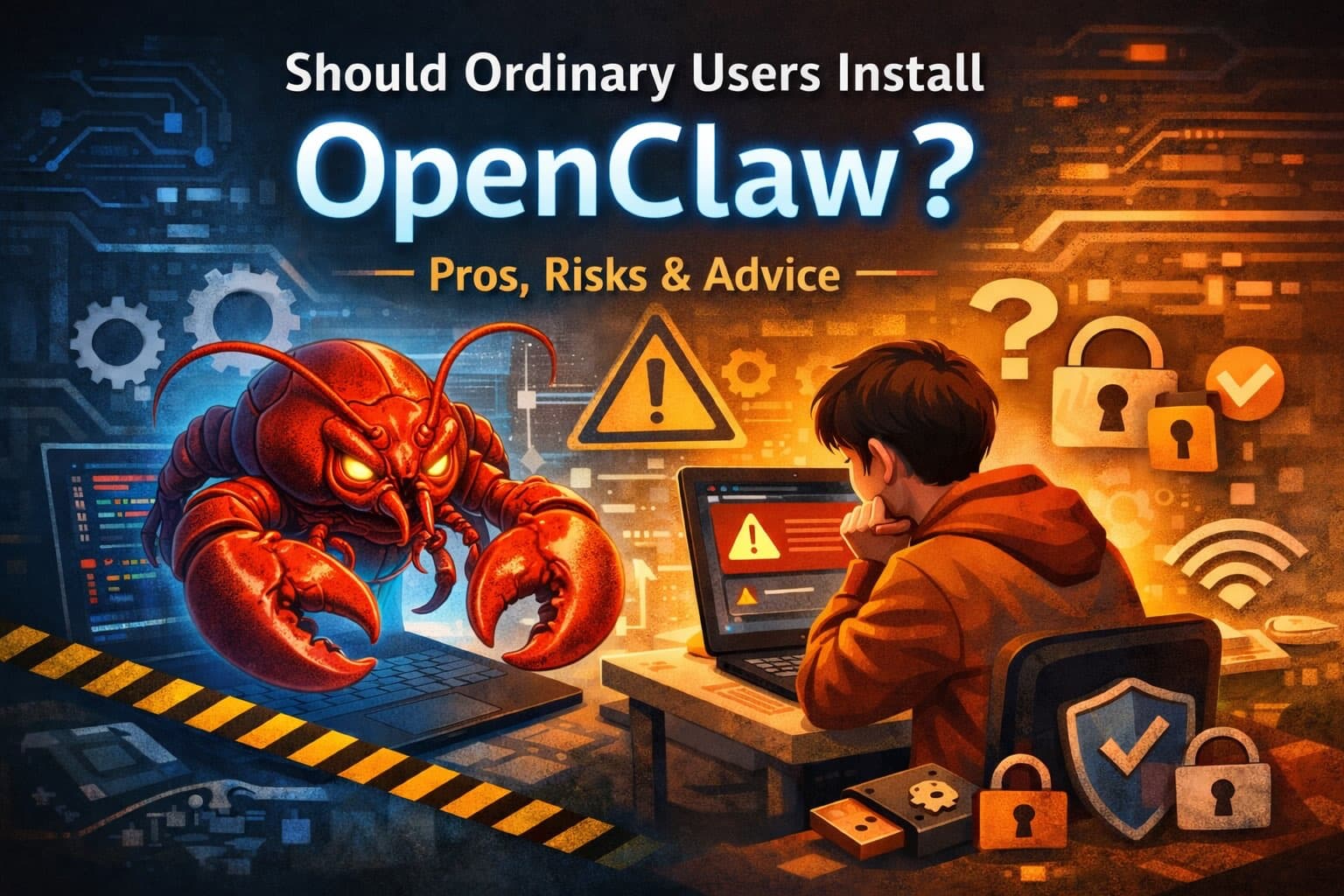
Description
OpenClaw gives users a highly flexible self-hosted AI agent experience, but that flexibility comes with real security, privacy, and operational risks. Before connecting OpenClaw to email, messaging apps, internal files, or production workflows, users should understand where the biggest risks come from and how to reduce them.
Content
OpenClaw is exciting for a simple reason: it promises a more useful kind of AI. Instead of being just a chatbot in a browser tab, it can connect to channels, tools, files, workflows, and memory systems so the assistant can actually do things. For power users, founders, developers, and ambitious teams, that sounds like the future.
It may be. But it also changes the risk profile completely.
A normal chat assistant can give a bad answer. An agent connected to your tools can send the wrong message, expose credentials, access the wrong file, trigger the wrong action, or quietly create operational mess at scale. That does not mean OpenClaw is a bad product. It means users should treat it less like a fun app and more like an automation system with real privileges.
The biggest mistake people make is assuming that “self-hosted” automatically means “safe.” Self-hosting can improve control, but it does not eliminate risk. In many cases, it simply shifts the responsibility from a vendor to the user. If your configuration is weak, your secrets are mishandled, your plugins are overly trusted, or your agent has too much authority, the danger is still yours.
The first major risk is secret exposure. Many OpenClaw setups need API keys, channel tokens, model credentials, webhook endpoints, and service configuration. Once an agent starts using those systems, secret handling becomes critical. If credentials appear in logs, transcripts, config output, local files, tool results, or agent workspaces, then the weakest point is no longer the model itself. It is your environment. This becomes especially serious when the same instance is tied to business tools, cloud accounts, developer systems, or customer communications.
The second risk is over-permissioned tools. AI agents become genuinely useful when they can run commands, read files, call APIs, and interact with external services. But every tool expands the blast radius of a bad decision. A harmless test agent can become dangerous when it gains shell access, repository write permissions, Slack posting rights, CRM credentials, or deployment authority. In practice, many users give agents broad permissions early because it makes demos more impressive. That is often the exact moment the safety boundary disappears.
The third risk is prompt injection and instruction hijacking. This is one of the most underestimated issues in the AI agent world. An agent does not only listen to the user. It may also absorb instructions from webpages, documents, messages, plugin outputs, imported skills, and other external text. If one of those sources contains malicious or manipulative instructions, the agent may start behaving in ways the operator did not intend. That can lead to data leakage, unsafe actions, hidden workflow changes, or subtle corruption of future outputs.
The fourth risk is untrusted skills, plugins, and community add-ons. Open ecosystems grow fast because people love reusable tools. The downside is that every new skill or plugin becomes part of your trust boundary. A useful extension may also contain poor security hygiene, excessive permissions, unsafe command patterns, insecure storage logic, or behavior you do not fully understand. This is especially risky for non-technical users who install community components based on feature appeal rather than code review.
The fifth risk is silent workflow drift. Even when an agent is not “hacked,” it can still create business risk through gradual misalignment. A prompt changes. A memory file grows noisy. A new plugin gets added. A model provider changes behavior. A system instruction becomes too long or contradictory. None of these failures looks dramatic at first, but together they can make the agent less reliable, less auditable, and more expensive over time. Teams often notice only after customer-facing behavior starts to slip.
Another important issue is privacy and compliance. Once OpenClaw is connected to emails, internal documentation, customer conversations, or sales operations, it may touch regulated or commercially sensitive information. If the instance is badly secured, if logs are retained too broadly, or if external APIs process data in ways the operator has not fully assessed, privacy exposure can become a legal and reputational problem rather than just a technical one.
There is also a very practical reliability risk. Self-hosted AI systems are not just software; they are living infrastructure. Tokens expire. Ports break. gateways fail. Dependencies conflict. Plugins stop working after updates. Model endpoints change. Memory files become messy. Cron jobs duplicate actions. When users deploy OpenClaw into business workflows without monitoring, rollback discipline, or staged updates, they often discover that the hardest part is not getting it to work once. It is keeping it trustworthy over time.
So should people avoid OpenClaw? Not necessarily. The better conclusion is that OpenClaw should be used with the same seriousness as any privileged automation platform. Start narrow. Limit permissions. Isolate environments. Keep secrets outside agent-visible contexts wherever possible. Review every plugin before enabling it. Separate testing from production. Treat community skills as code, not as harmless content. Add logging, but do not log secrets. Review memory and prompt files regularly. Require human approval for any action that can affect money, customer data, infrastructure, or public communication.
For solo users, OpenClaw can still be a powerful personal system if it is deployed conservatively. For businesses, the right path is usually a hardened deployment model with role separation, strict tool allowlists, minimal credentials, clear audit trails, and an assumption that every integration increases risk as well as capability.
The real question is not whether OpenClaw is risky. Any capable AI agent is risky once it gains access to meaningful tools and information. The real question is whether you are deploying it like a toy, or managing it like infrastructure.
That distinction makes all the difference.
Key Insights
OpenClaw can be powerful and flexible, but the moment an AI agent touches your tools, channels, files, or secrets, convenience turns into real operational risk.