Content
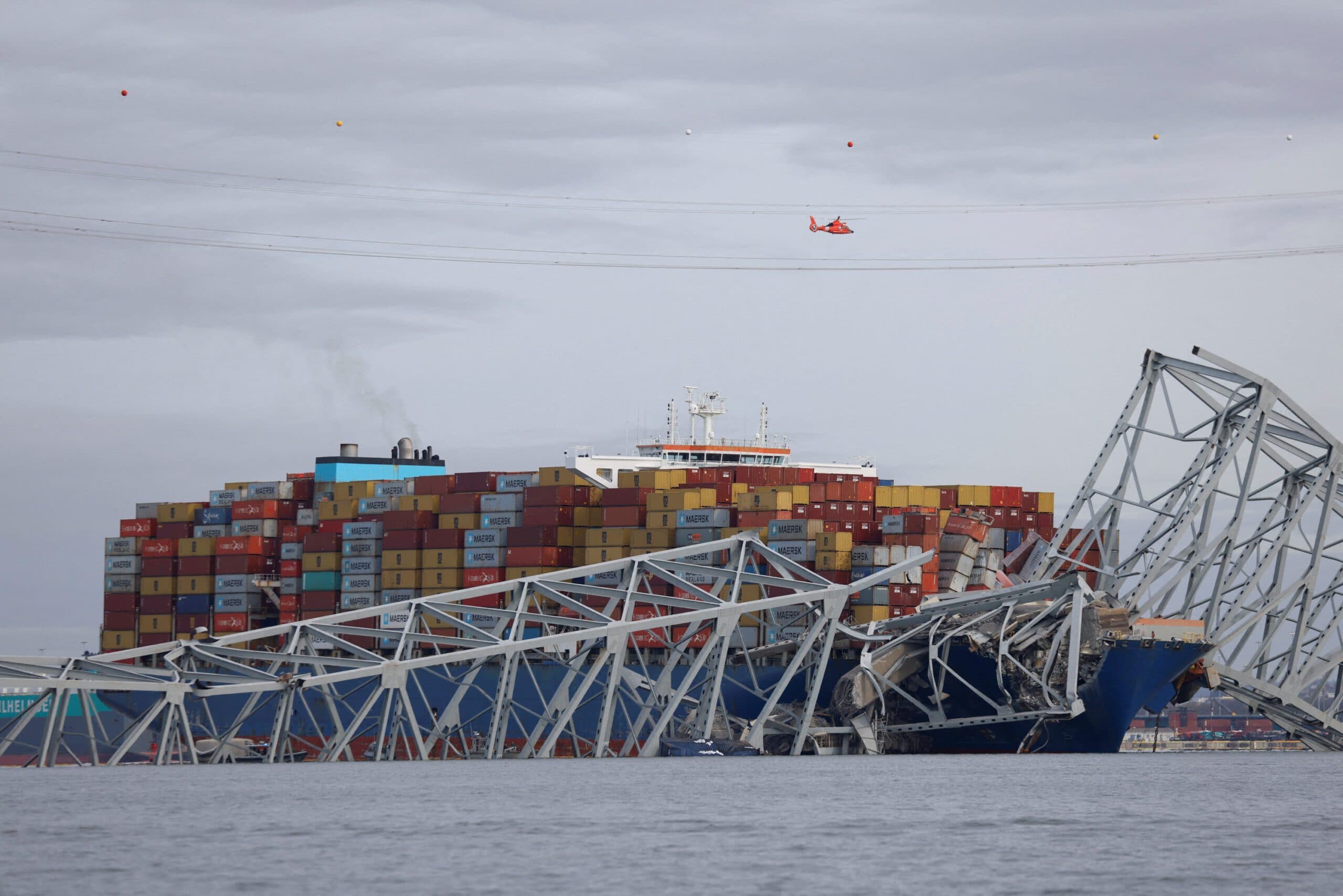
A single loose wire was identified as the root cause of the catastrophic electrical blackout aboard the containership Dali, which led to its collision with Baltimore’s Francis Scott Key Bridge in March 2024. The National Transportation Safety Board (NTSB) revealed that a labeling band on a signal wire prevented it from being fully inserted into its terminal block spring-clamp gate, resulting in a faulty connection. This seemingly minor installation error triggered the disconnection of the wire, causing a high-voltage breaker to trip unexpectedly. The resulting loss of propulsion and steering occurred as the 984-foot Singapore-flagged vessel was leaving Baltimore Harbor.
The blackout happened around 1:29 a.m. local time on March 26, affecting critical systems such as steering gear pumps, the fuel oil flushing pump, and the main engine cooling water pumps. This sudden loss of power made the Dali’s heading swing uncontrollably toward the pier supporting the bridge’s central span. Despite efforts by the pilots and ship’s team to regain control, the ship struck the southern pier. The impact caused a large part of the bridge structure to collapse into the Patapsco River, tragically killing six of seven highway maintenance workers present on the bridge. One worker survived with serious injuries, while an inspector escaped unharmed. Onboard the Dali, only one minor injury was reported among 23 crew and passengers.
The NTSB’s investigation attributed the probable cause to the loose wire connection resulting from improper wire-label banding, which led directly to the loss of electrical power and thus propulsion and steering. Contributing factors included the bridge’s vulnerability to impact by large ocean-going vessels and the absence of countermeasures recommended by the American Association of State Highway and Transportation Officials (AASHTO). Additionally, delayed and ineffective communication to warn and evacuate the highway workers exacerbated the death toll.
Beyond the immediate cause, the investigation uncovered several systemic issues. The Dali’s main engine was designed to shut down if cooling water pressure dropped, a safety standard at the time but one that became hazardous when the cooling pump lost power during the blackout. The flushing pump was also found to be used as a fuel service pump without redundancy, increasing risk. The probe suggested that infrared thermal imaging could have detected the loose wire during routine maintenance, a missed opportunity that might have prevented the accident.
The Key Bridge, constructed in 1977, was not designed to withstand collisions from modern mega-ships like the Dali, which dwarfs previous vessels such as the Blue Nagoya, which caused only minor damage in 1980. The NTSB has since expanded its investigation nationwide, urging owners of major bridges over navigable waterways to evaluate their vulnerability to large vessel impacts and implement structural protections and emergency response plans.
The collision led to over $18 million in damages to the Dali and cargo losses yet to be fully calculated. Bridge replacement costs are estimated between $4.3 billion and $5.2 billion, with reconstruction efforts expected to extend to late 2030. Traffic disruptions affect more than 34,000 daily vehicles, including trucks and hazardous material carriers barred from Baltimore's tunnels, forcing lengthy detours.
In response to the findings, the NTSB issued 18 safety recommendations targeting multiple agencies. These include urging the U.S. Coast Guard to study redundancy requirements for large vessels in restricted port areas, encouraging the International Maritime Organization (IMO) to upgrade safety management codes akin to aviation standards, and improving voyage data recorder capabilities to function and record critical data during blackouts. The ship owner and manager, Grace Ocean and Synergy Marine Group, expressed appreciation for the thoroughness of the investigation and committed to reviewing the findings with their teams.
Overall, the Dali incident serves as a stark reminder of how a minor mechanical oversight can cascade into a multi-faceted disaster involving loss of life, vast infrastructure damage, and extensive socio-economic repercussions. It highlights urgent needs for technological upgrades, enhanced regulatory measures, and improved emergency communication protocols to prevent future tragedies of this scale.