
The Role of Artificial Intelligence in the Rise of the Best Prop Trading Firms | The AI Journal
Published: April 16, 2026 at 01:12 PM
News Article
market-and-exchange
economy
-business-and-finance
artificial-intelligence
information-technology-and-computer-science
technology-and-engineering
Content
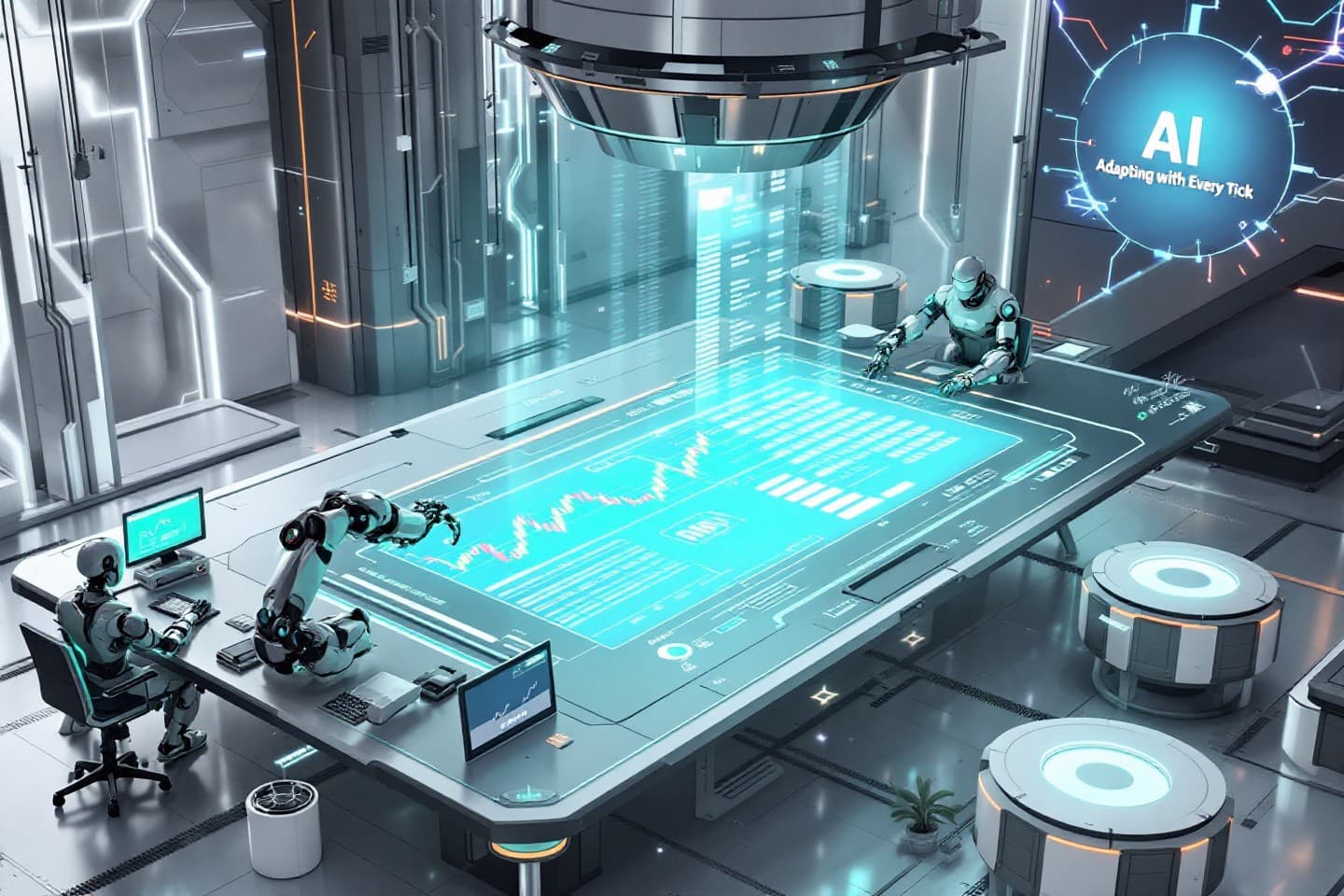
Proprietary trading has evolved from a domain dominated by instinct to a sophisticated ecosystem driven by algorithms and machine learning. According to reporting from The AI Journal, artificial intelligence is now the central infrastructure around which competitive firms are built.
One of the most immediate advantages is speed. Markets generate enormous volumes of data every second, including price movements, order book changes, and news headlines. No human trader can process all of that simultaneously, but AI-driven models ingest and analyze this data in real time. Natural Language Processing models scan thousands of articles in milliseconds, extracting sentiment and flagging events before most traders even open the headline.
Beyond speed, AI brings predictive power through machine learning models that learn from historical patterns and continuously adapt. Deep learning models identify non-linear relationships between variables, while reinforcement learning trains trading agents to optimize execution strategies through trial and error. This results in smarter trade execution, such as smart order routing that breaks large orders into smaller pieces to minimize market impact.
Risk management also receives a significant upgrade. Machine learning models monitor entire portfolios in real time, flagging unusual exposure concentrations and detecting early warning signs of correlated drawdowns. These systems operate without emotion or fatigue, unlike human risk managers who may hold losing positions too long. Some firms now use AI-driven stress testing systems that simulate thousands of market scenarios simultaneously.
The use of alternative data represents another frontier. Non-traditional sources like satellite imagery and credit card transaction data provide insights into economic activity before official data is released. AI cleans and processes this messy, unstructured data at a scale no human team could match. Additionally, automated machine learning frameworks accelerate strategy development by generating and evaluating thousands of variations.
Finally, AI is changing how firms identify and develop trading talent through evaluation platforms that assess decision-making patterns and psychological resilience. Open-source frameworks and cloud computing have democratized these tools, allowing smaller firms to deploy strategies that rival larger players. The message is clear: the edge in modern markets belongs to those who combine human judgment with machine intelligence.
Key Insights
Artificial intelligence has become the central infrastructure for competitive proprietary trading rather than a peripheral feature.
This integration allows firms to process data and manage risk at speeds impossible for human teams, fundamentally altering market dynamics.
While open-source tools lower barriers for smaller players, the complexity of maintaining high-frequency systems remains a significant hurdle.
Uncertainty persists regarding how these models will perform during unprecedented market stress events not present in historical training data.