Content
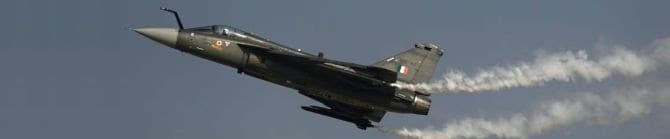
A tragic accident unfolded at the Dubai Air Show 2025 on Friday when an Indian Air Force (IAF) TEJAS light combat aircraft crashed during its aerial display at Al Maktoum International Airport. The mishap resulted in the death of the IAF pilot operating the indigenous fighter jet. The incident occurred around 2:10 pm local time, just moments after the aircraft took off, abruptly ending one of the event’s most awaited presentations. Witnesses reported seeing the aircraft lose control soon after leaving the runway, with the TEJAS sharply banking and pitching downward before striking the ground with considerable force.
As thick plumes of black smoke billowed over the venue, emergency teams quickly rushed to contain the fire. Firefighting units managed to control the blaze within minutes, and the immediate area was cordoned off to prevent harm to the spectators. Authorities temporarily suspended flying activities while moving the audience away from the runway zone for safety. Eyewitnesses praised the swift and effective response of the emergency personnel, including ground crews and firefighting helicopters that arrived promptly, ensuring no further damage beyond the tragic loss of the pilot.
The Indian Air Force officially confirmed the pilot’s death and expressed deep condolences to the bereaved family. They also announced the initiation of a court of inquiry to determine the cause of the crash. This investigation will examine potential factors like technical malfunctions, flight control issues, and environmental conditions at the time of the accident. Indian officials in Dubai are working closely with UAE aviation authorities to retrieve flight data and wreckage, with investigators set to analyze engine performance, telemetry logs, onboard system data, and the aircraft’s maintenance history.
The TEJAS Light Combat Aircraft (LCA), developed by Hindustan Aeronautics Limited (HAL) and the Aeronautical Development Agency (ADA), is a single-engine, lightweight fighter jet designed for multi-role operations. It belongs to the 4.5-generation class and is built using composite materials to reduce weight and enhance durability. The aircraft carries up to 4,000 kilograms of payload and features advanced radar, fly-by-wire controls, and electronic warfare systems. Its compact design provides exceptional maneuverability, a key attribute for both combat missions and aerial demonstrations.
Since the induction of the first squadron, No. 45 ‘Flying Daggers,’ in 2016, the TEJAS has been a symbol of India’s strides in indigenous defense technology. The government’s recent approval in 2025 for procuring 97 additional TEJAS MK-1A aircraft underscores strong confidence in the platform’s capabilities. This air show was set to highlight these advancements and India’s growing prowess in aerospace manufacturing on an international stage.
Experts caution that it is premature to draw conclusions about the crash, but potential causes under consideration include engine thrust loss, flight control failure, or aerodynamic instability during early maneuvers. Weather conditions such as crosswinds or air density at the airport might also have played a role. The inquiry’s findings will be critical in understanding the exact sequence of technical or procedural failures. This incident marks a serious setback for India’s demonstration of indigenous aerospace capabilities but is also seen as an opportunity to learn crucial lessons that can enhance safety and design in the future.
The event’s organizers, while deeply saddened, have urged the public to await official investigation results before jumping to conclusions based on online videos. The tragedy has cast a somber tone over an event meant to showcase technological progress and national pride. As the investigation unfolds, the focus will be on delivering recommendations to prevent recurrence and reinforce confidence in the TEJAS program, which remains a cornerstone of India’s 'Make in India' defense initiative.