
Typhoon Kalmaegi leaves 52 dead, mainly in Philippine province still recovering from deadly quake
Content
Key Insights
Core deconstruction reveals key facts: Typhoon Kalmaegi caused 52 deaths and 13 missing persons primarily in Cebu province; a helicopter crash en route to disaster aid added six fatalities; the storm had winds up to 120 kph and dissipated into the South China Sea; over 387,000 people were evacuated; and the event compounded recovery from a recent 6.9 magnitude earthquake.
Direct stakeholders include affected residents, emergency responders, and government agencies, while peripheral groups encompass displaced populations, transport operators, and local economies influenced by disrupted services.
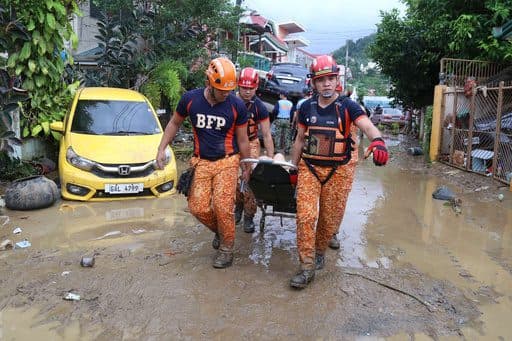
Immediate impacts involve widespread flooding, loss of life, infrastructure damage, and interrupted transportation, reflecting behavioral shifts such as mass evacuations and delayed rescue efforts.
Comparatively, the September 30 earthquake similarly caused significant casualties and displacement, underscoring recurrent challenges in multi-hazard response coordination in the region.
Future projections suggest opportunities for enhanced disaster preparedness leveraging improved sheltering and early warning systems, but also highlight risks such as compounded disaster effects and resource strain.
From a regulatory authority viewpoint, recommendations include: (1) Prioritize development of integrated multi-hazard early warning systems to reduce response times (medium complexity, high impact); (2) Strengthen infrastructure standards to withstand concurrent natural disasters (high complexity, medium impact); and (3) Expand training programs for coordinated multi-agency disaster response (low complexity, high impact).
This structured analysis underscores the necessity for resilient disaster risk management to mitigate cascading effects in highly vulnerable regions.