
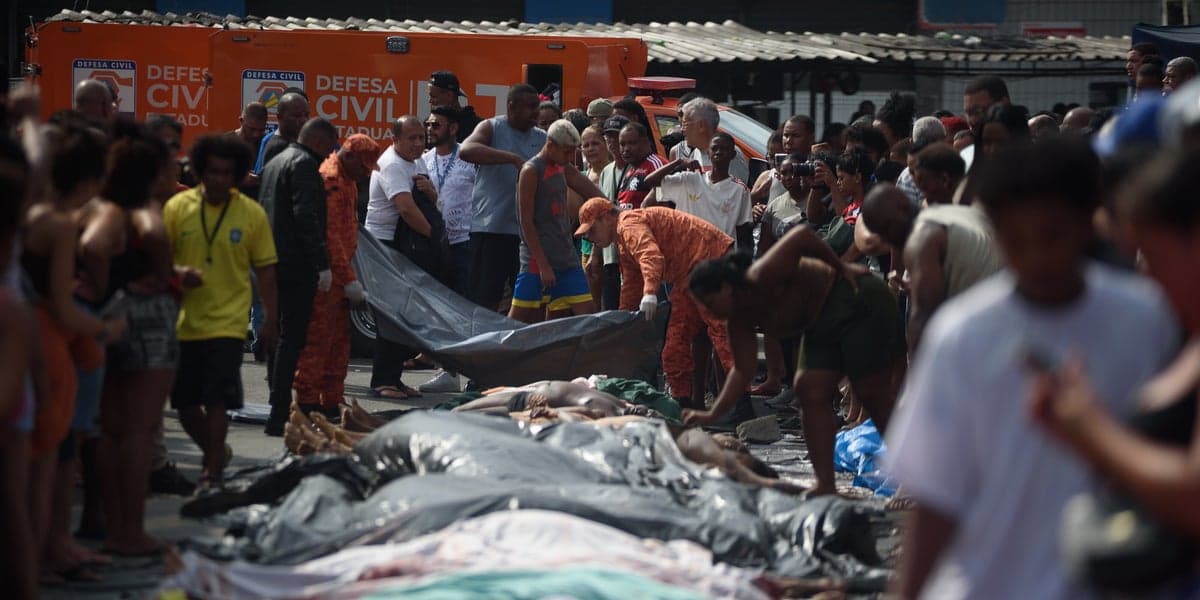
UPDATE: Corpses Line Street In Rio As Police Raid Death Toll Hits 132
Content
Key Insights
The core facts of this event include a deadly police raid killing at least 132 people in Rio’s Penha Complex on October 29, 2025; 113 arrests and 118 firearms seized; and the involvement of the Comando Vermelho gang as the primary target.
Geographically, this took place in Rio de Janeiro, Brazil, shortly before major international climate conferences scheduled in the city.
Direct stakeholders include the Rio police, the gang members targeted, and affected residents and families; indirect stakeholders span civil society groups, international human rights bodies, and the federal government.
Immediate consequences involve widespread public mourning, heightened tensions between communities and law enforcement, and potential disruption of peace and security in the city.
Historically, this can be compared with the 2021 Jacarezinho raid and the 1992 Carandiru penitentiary massacre, both marked by high death tolls and controversial police tactics.
Looking ahead, optimistic scenarios might include reforms in police operations and improved community relations driven by international scrutiny, whereas risk scenarios entail further violence, human rights violations, and reputational harm to Brazil on the global stage.
From a regulatory perspective, three key recommendations emerge: first, mandate independent investigations with transparent reporting (high priority, moderate complexity); second, institute stricter oversight and training for police use of force (medium priority, high complexity); and third, enhance federal coordination in high-risk operations to prevent unilateral actions (high priority, moderate complexity).
These steps could help mitigate future risks and rebuild public trust while safeguarding human rights.