
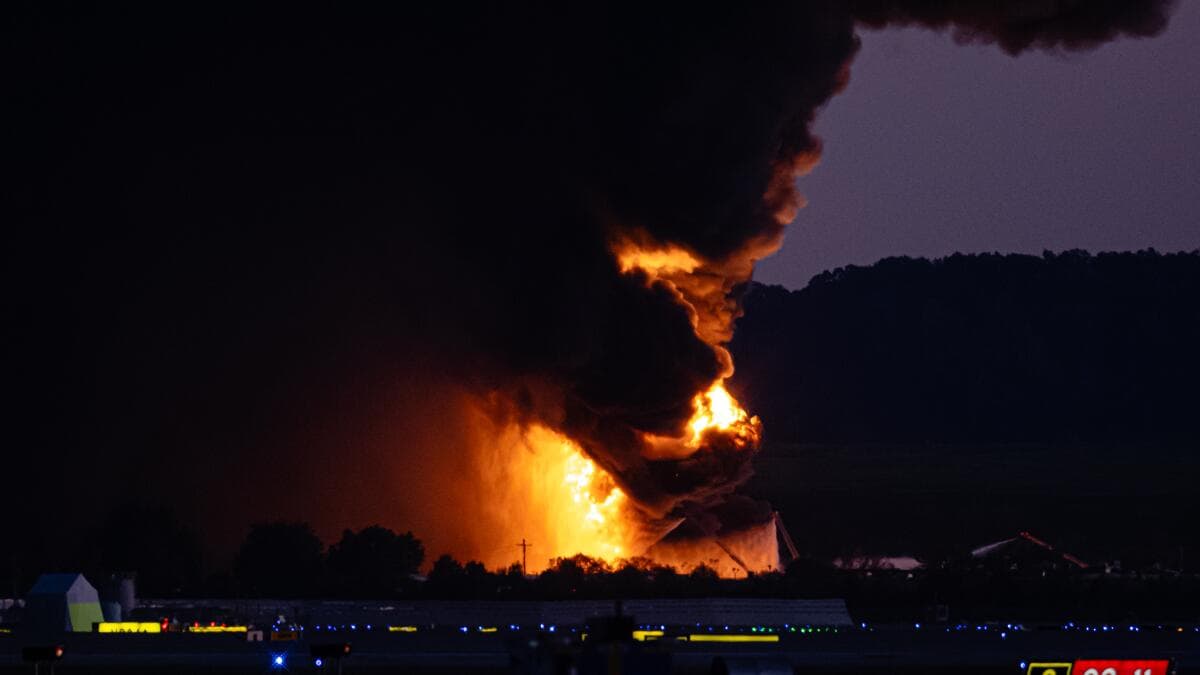
UPS plane crashes on takeoff from Louisville, Kentucky, airport, igniting huge fire on ground
Content
Key Insights
The core facts include the UPS plane crash occurring at 5:15 p.m. on November 4, 2025, at Louisville Muhammad Ali International Airport; the plane involved was a McDonnell Douglas MD-11; injuries were reported; and a large fire broke out, prompting emergency response and shelter-in-place orders for nearby residents.
Key stakeholders directly impacted include the flight crew, UPS logistics operations, airport personnel, emergency responders, and residents north of the airport.
Secondary effects ripple through cargo supply chains and local communities facing disruption and health risks from the fire and smoke.
Immediate consequences involve emergency response mobilization, flight suspensions, and community safety measures.
A historical parallel can be drawn to the 2013 Asiana Airlines crash at San Francisco International Airport, where rapid emergency response and coordinated communication helped mitigate fatalities and operational chaos.
Looking ahead, optimistic projections suggest opportunities for upgrading cargo aircraft safety protocols and emergency coordination, while risk scenarios highlight the need for improved maintenance regimes for aging fleets and enhanced ground emergency preparedness.
From a regulatory perspective, priority recommendations include enforcing stricter inspections on older cargo planes, developing advanced real-time monitoring systems for critical flight parameters, and expanding community emergency response training, each assessed for feasibility and potential to significantly reduce crash-related impacts.
This analysis clarifies verified facts and distinguishes them from projected outcomes, ensuring a balanced understanding of this critical aviation incident.