Content
In 2025, machine learning (ML) has evolved from a specialized technology into a fundamental component shaping digital experiences and business strategies. The perception that digital systems are increasingly intelligent, responsive, and predictive is no longer a mystery but a direct result of ML basics at work. Understanding how these learning systems operate is no longer just beneficial—it has become essential for anyone involved in technology-driven fields such as entrepreneurship, product management, or simply as an informed consumer navigating today’s tech landscape.
Current technological breakthroughs, including AI models that generate images from text, code-generation tools for developers, and AI assistants integrated into everyday workflows, are not mere buzzwords. These innovations are transforming workplaces and reshaping consumer expectations globally. However, the challenge remains that many individuals and organizations struggle to differentiate between hype and practical application. A strong foundation in machine learning concepts provides clarity on what is foundational, what is emerging, and why these developments are critical right now.
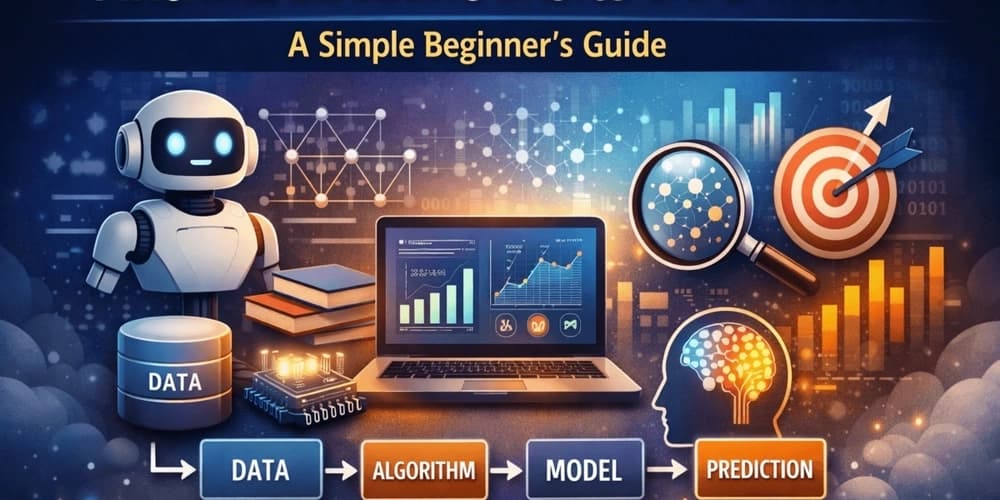
At the heart of these advancements lie four core pillars: data, algorithms, models, and evaluation. These ML fundamentals are indispensable for creating practical systems such as language models capable of drafting emails and strategy briefs, recommendation engines personalizing user experiences, and predictive analytics that optimize business decisions swiftly. The power of these tools depends heavily on their training, validation, and continuous monitoring—principles embedded in even the most basic machine learning frameworks.
Several key trends are accelerating the adoption of machine learning in 2025. Firstly, AI platforms have become mainstream tools offering plug-and-play ML services that enable teams without deep data science expertise to develop intelligent features. This democratization spans a variety of sectors, including retail and healthcare, where automated pipelines convert raw data into actionable prediction models without requiring complex programming.
Secondly, real-time decision-making and personalization have become vital as consumers expect tailored experiences instantly. Streaming services, search engines, and financial applications rely on continuously adapting systems that make ML knowledge indispensable for entrepreneurs aiming to meet today’s user demands. Thirdly, the movement toward explainable and ethical AI responds to increased scrutiny of bias and transparency. Organizations now prioritize creating models that are both interpretable and accountable, underscoring the importance of a human-centered introduction to machine learning.
Fourthly, edge and on-device learning represent a significant shift where systems process and learn from data directly on devices rather than relying solely on the cloud. This approach enhances response speed and privacy protections, reflecting a more efficient and accessible extension of ML fundamentals.
The impact of these trends extends beyond developers. Marketing teams utilize predictive segmentation to minimize wasted advertising spend, product managers apply pattern recognition to refine offerings, small businesses use automated forecasting to optimize inventory, and HR departments improve talent matching through learning systems. Consequently, understanding core ML concepts like supervised, unsupervised, and reinforcement learning moves from theoretical knowledge to practical necessity.
Fortunately, mastering ML does not require becoming a data scientist. Concise guides that focus on identifying patterns and underlying logic provide the intuition needed to evaluate tools critically, select appropriate vendors, and communicate effectively with technical stakeholders. Building knowledge from foundational concepts towards strategic implementation is the recommended pathway to avoid confusion and maximize impact.
Ultimately, machine learning in 2025 is not a transient tech trend but a strategic imperative. Entrepreneurs and professionals who grasp the true value behind ML tools can make informed decisions, avoid common pitfalls, and develop stronger products more rapidly. Understanding the logic that powers learning systems transforms users from reactive consumers into deliberate technology adopters, enabling them to harness AI innovations with confidence and purpose.