
How Ojamaker is Powering Instant Online Stores in Africa with AI
Publicado: May 8, 2026 at 01:51 PM
News Article
Contenido
In November 2025, the Ojamaker team announced the launch of Neo Commerce, an AI-native e-commerce ecosystem tailored specifically for African markets. This initiative aims to resolve the fragmentation inherent in current informal trade practices by converting scattered social media interactions into structured, owned digital storefronts. Unlike traditional platforms that impose rigid Western structures, Ojamaker focuses on automating operational roles while preserving the spontaneity of local buying behaviors.
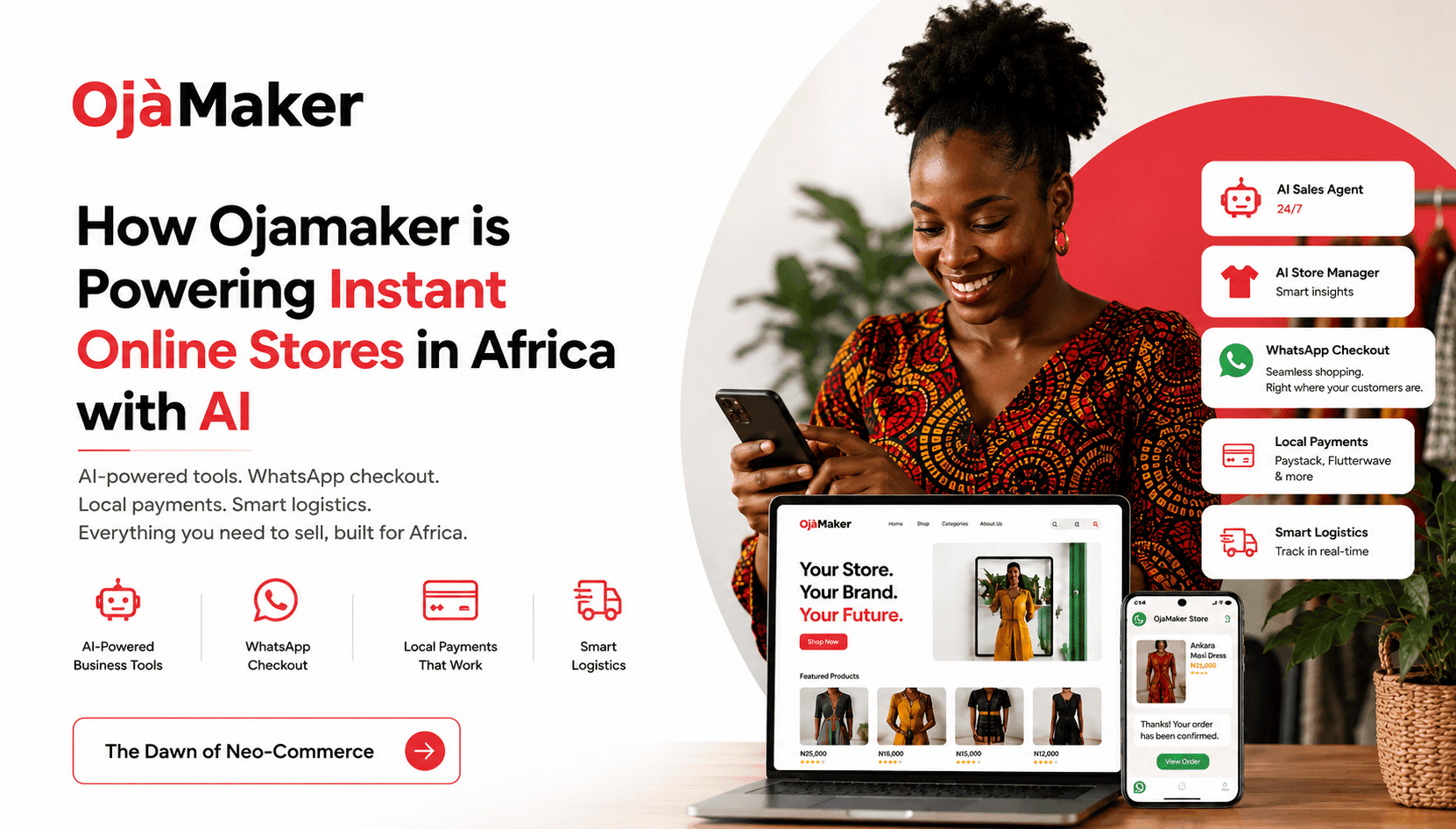
The platform addresses significant setup friction by allowing merchants to create functional stores in under five minutes. Key features include a 24/7 AI Sales Agent that manages customer conversations and inventory, alongside an AI Store Manager that tracks trends and optimizes efficiency. Additional tools such as an Image Enhancer convert mobile photos into studio-grade shots, while automated SEO and visual search capabilities improve product discoverability without manual input.
To align with local realities, Ojamaker integrates directly with familiar communication and payment channels. Buyers can complete transactions via WhatsApp Checkout, supported by built-in Paystack and Flutterwave integrations for cards, USSD, and bank transfers. The system also connects merchants to smart last-mile logistics providers, enabling real-time shipping label generation and order tracking within a single dashboard.
At its core, the platform positions itself as sovereign commerce infrastructure, granting users custom domains, SSL security, and full ownership of customer data. By combining the speed of social selling with global-standard reliability, Ojamaker seeks to empower entrepreneurs to transition from informal sellers to scalable brands without relying on algorithm-driven visibility cycles.
Perspectivas Clave
Ojamaker represents a strategic shift from providing isolated e-commerce tools to building comprehensive infrastructure that respects local trade nuances.
By embedding AI directly into operations, the platform reduces technical barriers that previously prevented informal traders from scaling effectively.
However, long-term success will depend on whether merchants adopt these structured workflows over established informal habits.
Continued market validation is required to confirm if this model can sustain growth across diverse regional economies.