
The Bias Spillover Effect in LLMs: When Fixing One Bias Breaks Another - Institute for Ethics in Artificial Intelligence
Researchers at the Institute for Ethics in Artificial Intelligence have identified a critical flaw in current artificial intelligence alignment practices known as the bias spillover effect. This phenomenon occurs when fixing bias on one social axis unintentionally alters behavior on another, often worsening disparities in untargeted groups. Most fairness approaches in machine learning currently work by optimizing for a single sensitive attribute, yet evidence suggests this strategy trades fairness on one dimension for unfairness on another. Studies indicate that debiasing one attribute can quietly increase disparities in others, particularly when those attributes are negatively correlated. An ongoing study led by the institute evaluated three large language models aligned to reduce gender bias using Direct Preference Optimization. These models were assessed on nine sensitive attributes including age, disability status, and race using the BBQ benchmark, with benchmark accuracy serving as a proxy for fairness. Preliminary insights suggest that aggregate, context-unaware results appeared positive, showing improved fairness across all attributes. However, when stratified by context, physical appearance fairness declined significantly in ambiguous questions where the correct answer was unknown. Sexual orientation and disability status also worsened in some models during these uncertain scenarios. The findings point to an urgent challenge for the field: fairness evaluation approaches must become fine-grained and context-aware by default. Aggregate scores are not just incomplete; a system that looks fair at first glance may be quite unfair when examined closely under specific conditions. Mitigating bias in large language models along one axis frequently exacerbates unfairness in unrelated categories, a phenomenon known as the bias spillover effect. This suggests that current aggregation-based fairness metrics may mask significant disparities within ambiguous decision-making contexts. While multi-attribute alignment strategies show promise, empirical evidence remains incomplete regarding their ability to fully prevent these cascading effects. Further research is required to determine how best to evaluate fairness without sacrificing capability across protected groups.
Publié : June 23, 2026 at 08:12 AM
News Article
Contenu
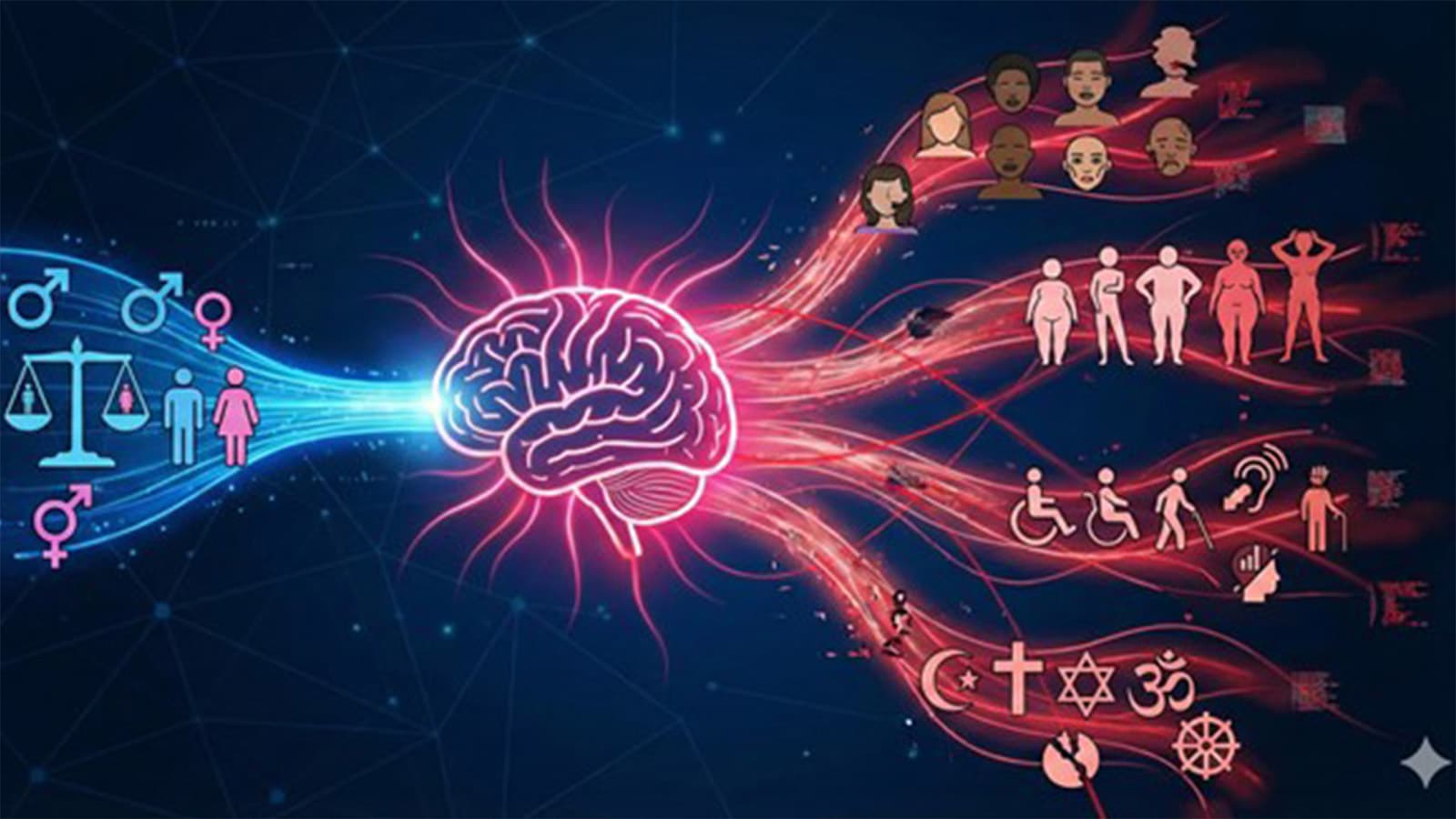
Researchers at the Institute for Ethics in Artificial Intelligence have identified a critical flaw in current artificial intelligence alignment practices known as the bias spillover effect. This phenomenon occurs when fixing bias on one social axis unintentionally alters behavior on another, often worsening disparities in untargeted groups.
Most fairness approaches in machine learning currently work by optimizing for a single sensitive attribute, yet evidence suggests this strategy trades fairness on one dimension for unfairness on another. Studies indicate that debiasing one attribute can quietly increase disparities in others, particularly when those attributes are negatively correlated.
An ongoing study led by the institute evaluated three large language models aligned to reduce gender bias using Direct Preference Optimization. These models were assessed on nine sensitive attributes including age, disability status, and race using the BBQ benchmark, with benchmark accuracy serving as a proxy for fairness.
Preliminary insights suggest that aggregate, context-unaware results appeared positive, showing improved fairness across all attributes. However, when stratified by context, physical appearance fairness declined significantly in ambiguous questions where the correct answer was unknown. Sexual orientation and disability status also worsened in some models during these uncertain scenarios.
The findings point to an urgent challenge for the field: fairness evaluation approaches must become fine-grained and context-aware by default. Aggregate scores are not just incomplete; a system that looks fair at first glance may be quite unfair when examined closely under specific conditions.
Insights clés
Mitigating bias in large language models along one axis frequently exacerbates unfairness in unrelated categories, a phenomenon known as the bias spillover effect.
This suggests that current aggregation-based fairness metrics may mask significant disparities within ambiguous decision-making contexts.
While multi-attribute alignment strategies show promise, empirical evidence remains incomplete regarding their ability to fully prevent these cascading effects.
Further research is required to determine how best to evaluate fairness without sacrificing capability across protected groups.