Artificial Intelligence: The Next Stage of Digital Capitalism | The AIDEM
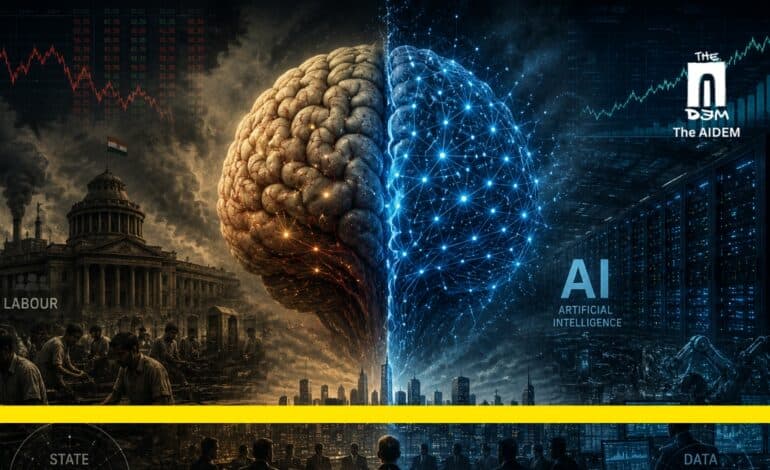
The artificial intelligence industry is currently at a critical juncture where major players and governments are vying for control of technology with the potential to transform human life dramatically. Despite warnings from prominent experts regarding the dangers of unchecked development, the pursuit continues unabated. Recent apprehensions suggest this high-stakes game could cause significant disruption to the global economy, regardless of whether the technology succeeds or fails. Panic triggered by a recent update to Anthropic’s AI agent demonstrated the gravity of these concerns, sending the IT stock market into a frenzy. Analysts believe the introduction of advanced AI may render traditional software-as-a-service business models obsolete, leading to widespread job losses and industry upheaval. Media outlets have even coined the term SaaSpocalypse to describe a future where automation replaces human labor in white-collar roles. Furthermore, there is lingering fear that the return on trillions of dollars in private investment will not meet expectations. Large technology companies are investing heavily in AI startups, which often use funding to purchase products from their investors, creating circular deals that could collapse like a house of cards if one link breaks. Historically, the AI industry emerged from periods of stagnation known as the AI Winter following the rise of digital capitalism. This era describes how technologies developed by governments were commercialized and integrated into the market economy, creating massive online repositories of data. While the digital revolution brought positive changes, it eventually led to an exploitative global economy where large digital companies wield enormous power. Modern chips such as GPUs provided the computing power necessary to handle big data, allowing AI to evolve from search algorithms into independent services capable of generating text, images, and videos. A new phase of digital capitalism is characterized by extreme centralization and the influence of finance capitalism willing to make speculative investments. Unlike the early internet, which promised decentralization, the AI sector is dominated by big tech companies like Microsoft, Alphabet, and Meta, alongside financial interests backing them. The industry’s obsession with achieving artificial general intelligence often ignores environmental issues, while firms supplying infrastructure like Nvidia have become more valuable than the software companies themselves. Additionally, a corporate-state complex is emerging where profit motives converge with national security and economic supremacy goals. The impact on the workplace remains uncertain, though challenges in programming and content creation signal broader changes. Historically, new opportunities arose at the same rate old jobs disappeared, but capitalism’s survival depends on constant expansion into new markets. Marxist analysis suggests that mechanization replaces living labor with dead labor, potentially reducing workers’ ability to bargain for wages and leading to crises of overproduction. As machines take over human labor, the internal structure of capitalism based on labor-based value creation is shaken, making society more exploitative without concrete steps for social control. Beyond the workplace, AI acts as a social force shaping how people think and communicate, often increasing feelings of alienation. Algorithms on digital platforms shape behavior according to market demands, treating individual identity as a product to be monetized. Overreliance on generative AI can impair critical thinking skills, leading to cognitive dependence and the segregation of the public sphere into echo chambers. Ultimately, the technology reflects the power dynamics of its socio-economic context, promising empowerment while delivering surveillance and enslavement under current conditions. One prominent ideological tenet of digital capitalism is the assertion that social problems are technical in nature, leading to technology fetishism. This belief treats AI as an autonomous force destined to improve life, obscuring the human labor and power dynamics underlying its development. AI is not ideologically neutral; it reinforces existing structural inequalities and dominant worldviews. Abandoning these delusions is the first step toward reimagining AI with true liberating potential, acknowledging that the choice is political rather than purely technological.