
Social intelligence Arises Between Minds
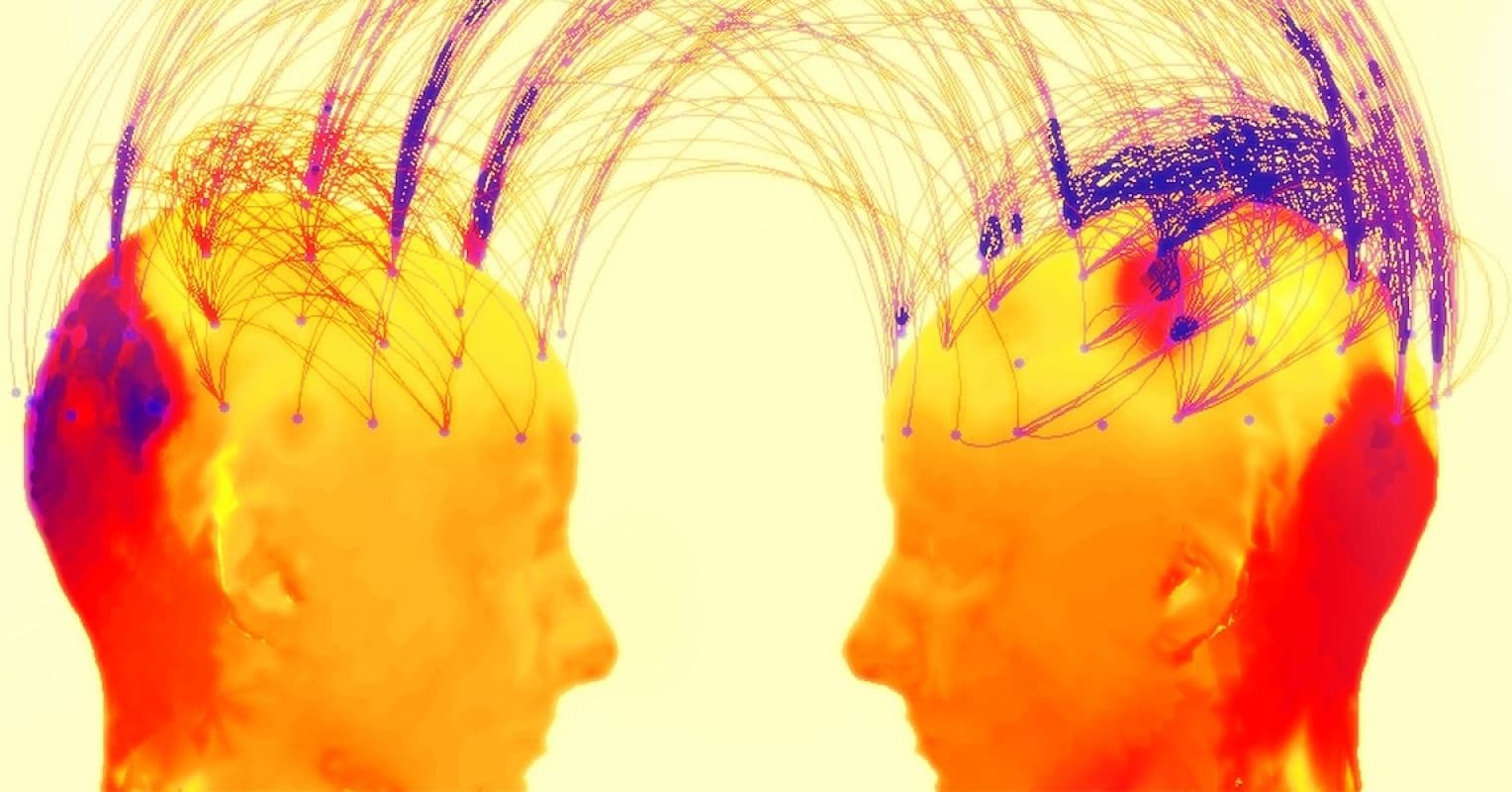
Two landmark studies published simultaneously in 2025 have fundamentally challenged the view of intelligence as a solitary property. Research led by Weizhe Hong at UCLA and collaborators demonstrated that interacting brains form shared neural subspaces, a phenomenon also observed in reinforcement learning agents. These findings support the earlier Social Neuro-AI framework proposed by Samuele Bolotta and Guillaume Dumas, which posits that social interaction acts as the missing substrate for certain forms of intelligence. Hong’s team used calcium imaging on socially interacting mice to identify distinct neural populations dedicated to social dynamics. They found that inhibitory GABAergic neurons contained significantly larger shared subspaces than excitatory neurons, suggesting an architecture specifically tuned for connection. When researchers trained artificial agents in multi-agent environments, these same shared activity patterns emerged, and disrupting them caused social behaviors to collapse. A companion study by Jiang and colleagues focused on cooperation mechanisms using operant tasks requiring precise coordination between pairs. Both mice and AI agents developed convergent strategies to maximize mutual rewards, encoding decision processes in distinct neural populations. This suggests that the computational architecture of cooperation is a universal solution discovered by sufficiently complex systems facing joint action demands. Despite these advances, the field faces a conceptual hurdle regarding how current large language models process information. While they are trained on human dialogue, they have never participated in active social coupling themselves. Experts argue that moving toward a neuroethological approach for AI could bridge the gap between aggregate performance and the structural analysis required to understand emergent sociality.
公開日: June 7, 2026 at 07:43 PM
News Article
コンテンツ
Two landmark studies published simultaneously in 2025 have fundamentally challenged the view of intelligence as a solitary property. Research led by Weizhe Hong at UCLA and collaborators demonstrated that interacting brains form shared neural subspaces, a phenomenon also observed in reinforcement learning agents. These findings support the earlier Social Neuro-AI framework proposed by Samuele Bolotta and Guillaume Dumas, which posits that social interaction acts as the missing substrate for certain forms of intelligence.
Hong’s team used calcium imaging on socially interacting mice to identify distinct neural populations dedicated to social dynamics. They found that inhibitory GABAergic neurons contained significantly larger shared subspaces than excitatory neurons, suggesting an architecture specifically tuned for connection. When researchers trained artificial agents in multi-agent environments, these same shared activity patterns emerged, and disrupting them caused social behaviors to collapse.
A companion study by Jiang and colleagues focused on cooperation mechanisms using operant tasks requiring precise coordination between pairs. Both mice and AI agents developed convergent strategies to maximize mutual rewards, encoding decision processes in distinct neural populations. This suggests that the computational architecture of cooperation is a universal solution discovered by sufficiently complex systems facing joint action demands.
Despite these advances, the field faces a conceptual hurdle regarding how current large language models process information. While they are trained on human dialogue, they have never participated in active social coupling themselves. Experts argue that moving toward a neuroethological approach for AI could bridge the gap between aggregate performance and the structural analysis required to understand emergent sociality.