
How AI Is Changing Location Intelligence In 2026
Location intelligence in 2026 has evolved beyond simple cartography into a system that reasons about spatial data. While maps historically recorded where customers bought goods or trucks drove, AI now predicts the next move, reads raw satellite imagery without human tracing, and answers spatial questions typed in plain English. This shift alters what a business can ask of its geographic information, turning a question that once took an analyst a week of manual work into an instant response that includes a forecast. The capability reaches most companies through software layers that absorb machine learning features previously requiring a data science team. A key technical leap is the geospatial foundation model, such as IBM and NASA’s Prithvi-EO-2.0, a 600-million-parameter model released in December 2024 and deployed aboard a spacecraft. Competitors like Google’s AlphaEarth Foundations and Meta’s DINOv3 aim similarly at turning planetary imagery into usable features. The practical effect is speed; work that once meant training a custom model for months can now start from a pretrained backbone and finish in days. Interfaces are changing alongside the engine, allowing users to ask questions in ordinary words. An agent translates the request, runs the spatial query, and returns the result without the user touching a query language. This collapses the distance between a question and its answer, enabling a store planner to iterate in minutes rather than waiting days. Speed has reached the point where some analysis runs continuously instead of on demand, watching live feeds of movement and weather to flag changes the moment they appear. The economics are moving fast, with Gartner putting worldwide AI spending near $2.59 trillion in 2026, up roughly 47% on the year before. That scale of investment is pulling location tools forward regardless of individual vendor actions. Pretrained models released openly and cloud tools priced by usage mean a regional chain can now run analysis that once required a dedicated lab. However, the largest players still hold an edge in proprietary data and raw computing power. None of this removes the person from the loop. A model can tell a company where demand will likely rise, but it cannot decide if the company should chase that demand. A confident wrong answer from an AI looks exactly like a confident right one, so teams treat AI as a fast, tireless analyst instead of an oracle. They let it do the heavy reading of imagery and patterns, then apply business sense the model has no access to.
发布时间: June 11, 2026 at 01:26 AM
News Article
内容
Location intelligence in 2026 has evolved beyond simple cartography into a system that reasons about spatial data. While maps historically recorded where customers bought goods or trucks drove, AI now predicts the next move, reads raw satellite imagery without human tracing, and answers spatial questions typed in plain English. This shift alters what a business can ask of its geographic information, turning a question that once took an analyst a week of manual work into an instant response that includes a forecast.
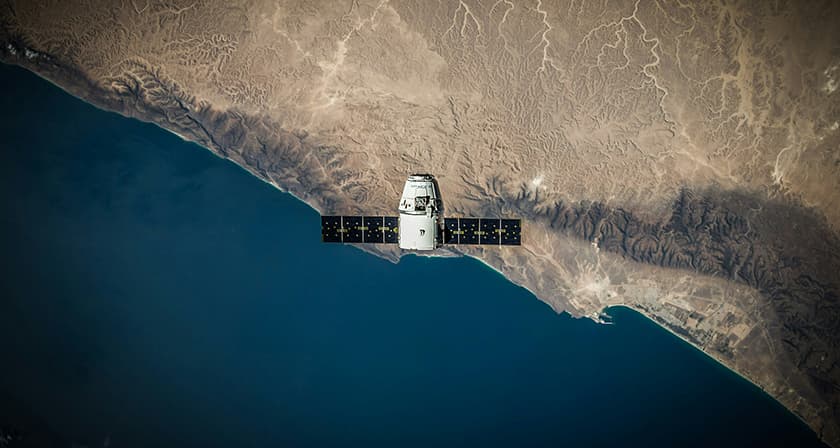
The capability reaches most companies through software layers that absorb machine learning features previously requiring a data science team. A key technical leap is the geospatial foundation model, such as IBM and NASA’s Prithvi-EO-2.0, a 600-million-parameter model released in December 2024 and deployed aboard a spacecraft. Competitors like Google’s AlphaEarth Foundations and Meta’s DINOv3 aim similarly at turning planetary imagery into usable features. The practical effect is speed; work that once meant training a custom model for months can now start from a pretrained backbone and finish in days.
Interfaces are changing alongside the engine, allowing users to ask questions in ordinary words. An agent translates the request, runs the spatial query, and returns the result without the user touching a query language. This collapses the distance between a question and its answer, enabling a store planner to iterate in minutes rather than waiting days. Speed has reached the point where some analysis runs continuously instead of on demand, watching live feeds of movement and weather to flag changes the moment they appear.
The economics are moving fast, with Gartner putting worldwide AI spending near $2.59 trillion in 2026, up roughly 47% on the year before. That scale of investment is pulling location tools forward regardless of individual vendor actions. Pretrained models released openly and cloud tools priced by usage mean a regional chain can now run analysis that once required a dedicated lab. However, the largest players still hold an edge in proprietary data and raw computing power.
None of this removes the person from the loop. A model can tell a company where demand will likely rise, but it cannot decide if the company should chase that demand. A confident wrong answer from an AI looks exactly like a confident right one, so teams treat AI as a fast, tireless analyst instead of an oracle. They let it do the heavy reading of imagery and patterns, then apply business sense the model has no access to.